
Buyer's Guides · Foodie Tips · Fresh Food
Should You Put Bananas in the Fridge? Storage Guide
11 June 2023
The short answer
Put bananas in the fridge only once they are already ripe. Cold stops the ripening in its tracks, so a ripe banana keeps for up to a week instead of a couple of days, and the skin goes brown while the flesh stays good. Refrigerate a green banana and it will never ripen properly: the peel turns black and the inside stays starchy.
That one distinction, ripe versus unripe, settles most of the arguments about bananas and fridges. This guide covers the rest: what cold actually does to them, how they behave on the counter, and why a banana in a fruit bowl ripens everything around it.
Do Bananas Last Longer in the Fridge?
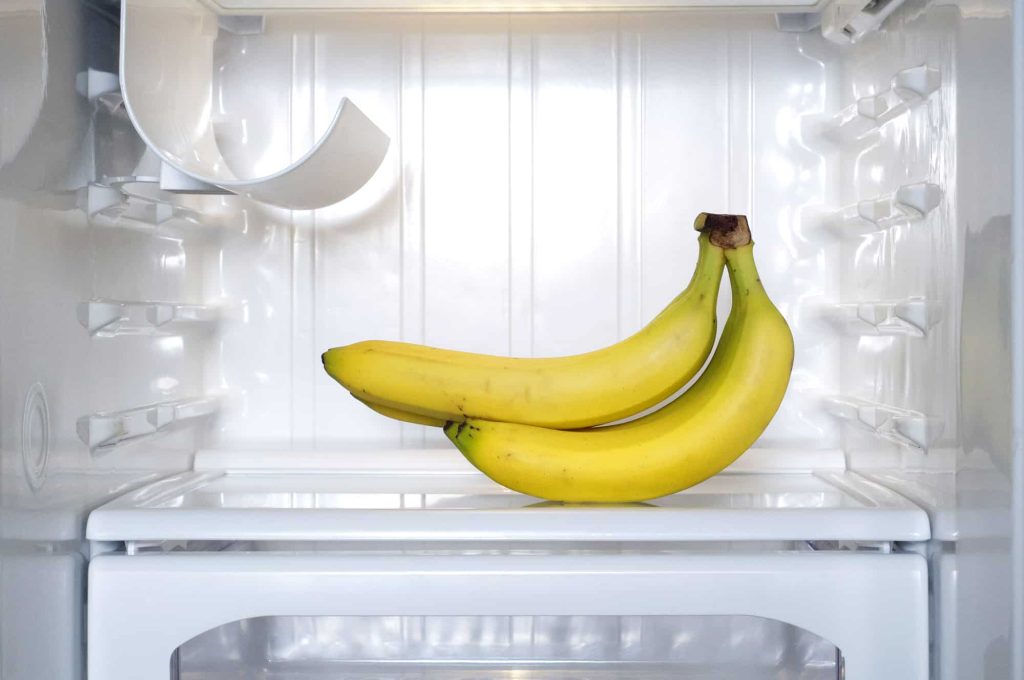
Yes, if they are ripe when they go in. Cold slows the ripening process, so a ripe banana that would give you two more days on the counter gives you several more in the fridge, and many people report a full week.
The skin turns a brownish shade within hours and keeps darkening. The flesh inside stays pale and firm, which is the part that matters. A banana that looks alarming in the bowl is usually perfectly good once peeled.
So refrigeration is not a way to keep bananas looking nice. It is a way to stop the clock on bananas you already have too many of.
Why You Shouldn't Refrigerate Unripe Bananas
Bananas are tropical fruit, grown in hot and humid places, and they are among the fruits most sensitive to cold. The USDA describes what happens as chilling injury, and it starts within a few hours in a domestic fridge.
Five things go wrong when the banana was not ripe to begin with.
- The ripening never completes properly. Cold interrupts the process rather than pausing it, so the fruit does not pick up where it left off when you take it out.
- The peel turns black rather than brown. On an unripe banana this is damage, not the cosmetic browning a ripe one gets.
- The flesh stays starchy. It never develops the sweetness, which is the whole point of ripening: ethylene converts the starch into sugars.
- The texture changes for good. Brown spots in the skin translate into bruise-like tender patches in the flesh the longer it sits.
- They pick up smells. Bananas absorb strong odors quickly, so an uncovered banana next to last night's leftovers will taste like them. Use a covered container if you are baking with them later.
MindShift Mentors · 7 nights free
Dinner sorted. Habits still stuck?
Break the Habit is 15 to 20 minutes of guided audio a day.
Fridge or Counter: Which is Better?
Neither is right in general, because they do different jobs. The counter ripens, the fridge preserves.
| Fridge | Counter | |
|---|---|---|
| Best for | Bananas that are already ripe | Bananas that still need to ripen |
| Keeps for | Up to about a week | A couple of days once ripe |
| Appearance | Skin browns quickly, flesh stays pale | Ripens evenly and looks better |
| Risks | Chilling injury if unripe, absorbs fridge odors | Sunlight, heat, insects, bruising |
On the counter, keep them out of direct sunlight and away from anything that gives off heat: the stove, the toaster, the coffee machine, and the warm side of the fridge itself. Heat pushes them through ripening too fast and unevenly, which is the counter version of chilling injury.
Covering them helps with both insects and bruising. Two fruit baskets, one inverted over the other, does the job without trapping the ethylene the way a sealed bag would.
Should You Store Bananas With Other Fruit?
Only if you want the other fruit to ripen faster. Bananas produce a moderate but potent amount of ethylene gas, which is the hormone that triggers ripening, and anything sensitive to it sitting nearby will come on quickly.
Fruits that both respond to ethylene and produce their own are called climacteric, and putting two of them together means each accelerates the other. Apples, pears, avocados, melons, mangoes, kiwis and stone fruit all fall into that group.
| Store with bananas? | Why |
|---|---|
| Oranges: yes | Not very reactive to ethylene |
| Potatoes: yes | Barely respond to ethylene. Sweet potatoes do, so keep those apart |
| Pineapple, berries, grapefruit: yes | Not ethylene-sensitive |
| Apples: no | Climacteric, so they ripen each other, and both absorb each other's smell |
| Avocados: no | Climacteric. Unless you want the avocado ready tonight |
| Tomatoes: no | High ethylene producers themselves |
| Onions: no | High ethylene producers, though useful if you want bananas to hurry up |
| Garlic: careful | No ethylene problem, but bananas will absorb the smell |
| Lemons and limes: unclear | Sources disagree on whether they are ethylene-sensitive. Separate them if unsure |
Turned around, this is a useful tool rather than a problem. A rock-hard avocado in a paper bag with a ripe banana will be ready a day or two sooner.
Do Green Bananas Ripen in the Fridge?
No. Cold suppresses the ethylene process, so a green banana put in the fridge stays green inside while the skin goes black. Taking it out later does not rescue it.
If you have bought a bunch too green and want them slowed down, the fridge is still the wrong tool. Leave them on the counter until they are where you want them, then refrigerate.
Can You Put Bananas in the Fridge Overnight?
Yes, and this is one of the genuinely useful cases. If you have bananas at exactly the ripeness a recipe needs and you are baking tomorrow, a night in the fridge holds them roughly where they are instead of letting them go a stage further.
Same rule applies: only if they are ripe already.
Can You Refrigerate Peeled or Sliced Bananas?
You can, though they brown at the cut surfaces exactly as an apple does. A squeeze of lemon or lime juice slows it considerably.
Skip the citrus if the bananas are going into a cake, bread or muffins. Lemon juice changes both the flavor and the acidity of the batter, which matters where there is bicarbonate of soda in the recipe.
Freezing is the better option for peeled bananas you are not eating soon. Frozen banana is the base of sorbets, smoothies, ice creams and popsicles, and overripe fruit freezes perfectly well for baking later.
How Should You Store Banana Bread?
On the counter, wrapped in cling film or in a container, banana bread stays close to fresh for about four days. In the fridge it keeps roughly a week, though it firms up.
The wrapping is the important part either way, because an unwrapped loaf dries out fast. For longer than a week, cool it completely, wrap it in film or foil, and freeze it.
Do Bananas Become Poisonous in the Fridge?
No. A browned or blackened banana skin is a cosmetic and textural change, not a safety one, and nothing about refrigeration makes a banana dangerous.
The question usually traces back to potassium being naturally slightly radioactive. Only a tiny fraction of the potassium in a banana is the radioactive isotope, and the dose is trivial. It is a piece of physics trivia rather than a food safety issue.
Frequently Asked Questions
Why do bananas turn brown in the fridge?
Cold damages the cells in the peel, which releases enzymes that darken it. It happens within hours and it affects the skin far more than the flesh, so a ripe banana with a brown skin is usually fine inside.
How long do bananas last in the fridge?
Ripe bananas keep for up to about a week, against a couple of days on the counter. Unripe bananas do not benefit at all, because the cold stops them ripening rather than preserving them.
How do you make bananas ripen faster?
Leave them at room temperature, put them in a paper bag to concentrate the ethylene they give off, and add an apple or a ripe banana to the bag to speed it further. Warmth helps, direct sunlight does not.
How do you keep bananas fresh longer on the counter?
Keep them away from sunlight and heat sources, separate them from other climacteric fruit, and hang them or rest them on a curved side so they do not bruise. Once ripe, move them to the fridge.
Can you freeze bananas in the skin?
You can, but the skin turns black and becomes difficult to remove once frozen. Peeling them first and freezing the flesh in a bag is simpler, and you can portion it for smoothies or baking at the same time.
Does separating bananas make them last longer?
A little. Splitting the bunch spreads out the ethylene rather than concentrating it around the crown, which slows things slightly. It makes far less difference than temperature does.