
Croaker vs Spot vs Black Drum: Which Tastes Better?
Short answer: croaker gives you the best fillet for the effort, spot is the sweetest small fish you’ll cook whole, and black drum is excellent under about 5 kg and disappointing above it. All three belong to the same family, the drums and croakers (Sciaenidae), and they turn up in the same water at the same time of year, which is why they get mixed up on the pier and in the fish shop.
If you landed here from our piece on what croaker tastes like, this is the next question most people have: how does it stack up against the fish it gets caught with?
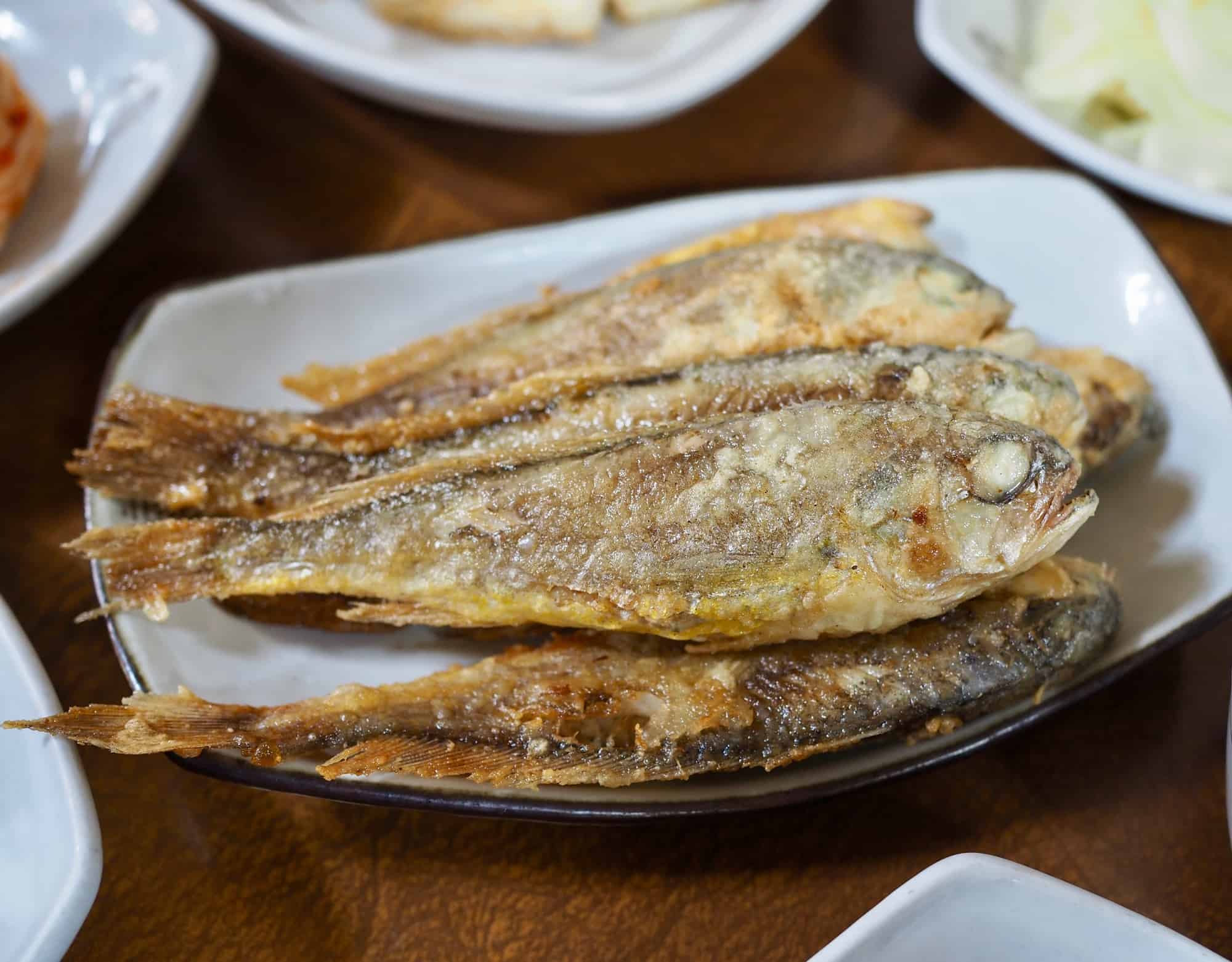
How do you tell croaker and spot apart?
Look behind the gills. Spot have one dark spot just behind each gill cover and a run of slanted stripes down the sides, usually with yellowish fins. Croaker have no shoulder spot. They’re silvery to bronze with faint brown speckling, and if you look under the chin you’ll see a row of tiny whisker-like barbels. Spot don’t have them.
Size is the other giveaway. Most spot come in around 20 cm, and a 30 cm spot is a good one. Croaker are bigger, commonly 30 to 35 cm and up to about a kilo.
What does each one taste like?
Croaker: mild, slightly sweet, white flesh with a fine flake. Not fishy when it’s fresh. The fillets are big enough to be worth taking off the bone, and they fry beautifully.
Spot: sweeter and a touch richer than croaker, with soft white flakes. Because they’re small, most people scale and gut them and cook them whole. A lot of anglers who grew up on both will tell you spot is the better eating fish, plate for plate. You just get less of it.
Black drum: firmer and meatier, mild with a faintly salty edge, and the raw flesh can have a pinkish tint. Small black drum are often compared to redfish or sheepshead. Big ones are a different animal. Fish over about 7 kg (15 lb) go tough and stringy, closer to chicken than to flaky fish.
Is black drum safe to eat with those worms?
Larger black drum often carry “spaghetti worms”, thin white parasites a few centimetres long, mostly in the tail section. They look awful but cooking kills them. You can also hold a fillet up to the light and pick them out with the tip of a knife. The simplest fix is to keep smaller fish. Most anglers who eat drum keep fish under about 5 kg and let the big ones go, which suits the fish population as well as the dinner table.
Which is the best eating?
Our ranking, for a home cook:
- Spot for flavour, if you don’t mind cooking whole fish and working around bones.
- Croaker for the best balance of flavour, fillet size and ease. It’s the one to buy if you’re new to this family.
- Small black drum for a firmer, steak-like fillet that holds up on the grill.
- Large black drum last. Fine in a chowder or fish cakes, poor as a fillet.
How should you cook each one?
Croaker: fillet, dredge in seasoned flour or cornmeal, and shallow-fry. It also bakes well with lemon and butter. Our croaker guide has eight ways to cook it.
Spot: scale, gut, score the sides two or three times, oil and season, then grill or pan-fry whole for 3 to 4 minutes a side. Score deep enough that the heat reaches the bone.
Black drum: skin the fillets (the skin is thick), trim the dark red line along the middle, then grill, blacken or bake. It takes strong seasoning well. Thick pieces can go on the barbecue skin-on, “on the half shell”, the way Gulf Coast cooks do redfish.
Cook all three to an internal temperature of 63°C (145°F), or until the flesh is opaque and flakes easily.
Where does mullet fit in?
Mullet isn’t a drum at all, but it shows up in the same autumn searches because the mullet run and the croaker and spot runs happen around the same time on the US Atlantic coast. Mullet is oilier and stronger-tasting than any of the three above, which is why it’s so often smoked or fried very fresh. If you like a mild white fish, start with croaker or spot. If you like oily fish such as mackerel, try mullet.
When is the best time to catch or buy them?
Autumn. On the US Atlantic coast, croaker and spot feed hard in late summer and early autumn before moving offshore to spawn in the cooler months. Chesapeake Bay and the Virginia and North Carolina coast are the heartland, which lines up with where people are searching for croaker right now. Black drum are around most of the year, with big schools in late winter and spring.
FAQ
Are croaker and spot the same fish?
No. They’re close relatives in the same family, but spot have a dark spot behind each gill and no chin barbels, and they’re usually smaller.
Are croaker good to eat?
Yes. Fresh croaker is mild, slightly sweet and flaky. It’s one of the more underrated cheap fish in the US.
What size black drum is best to eat?
Under about 5 kg (10 to 12 lb). Bigger fish get tough and are more likely to carry spaghetti worms.
Does croaker taste fishy?
Not when it’s fresh and kept cold. A strong fishy smell means it’s been sitting too long. Our croaker taste guide covers what to look for.
Can you eat the skin?
Croaker and spot skin crisps up nicely once scaled. Black drum skin is thick and usually removed. For more on fish skin, see eating salmon skin and scales.
Sources: Atlantic States Marine Fisheries Commission, Atlantic croaker species page (asmfc.org/species/atlantic-croaker); Wikipedia, Black drum; Anchors Up Carolina, Atlantic croaker vs spot fish; Saltwater Mecca, Are black drum good to eat.