
Croaker Fish: What Do They Taste Like?
Croaker fish tastes mild and slightly sweet, with firm white flesh. It is not a strongly fishy fish, which is why it suits people who find mackerel or sardines too much.
Below: how croaker compares with fish you already know, which croaker you are actually buying, how to deal with the bones, how long to cook it by method, and what is in it.
Is croaker a good eating fish?
Yes. Croaker is a popular eating fish along the US Atlantic and Gulf coasts, and Texas Parks and Wildlife describes Atlantic croaker as a very important commercial fish, with millions of pounds caught and sold every year. Virginia’s seafood council describes the meat as tender with a mild, sweet flavour.
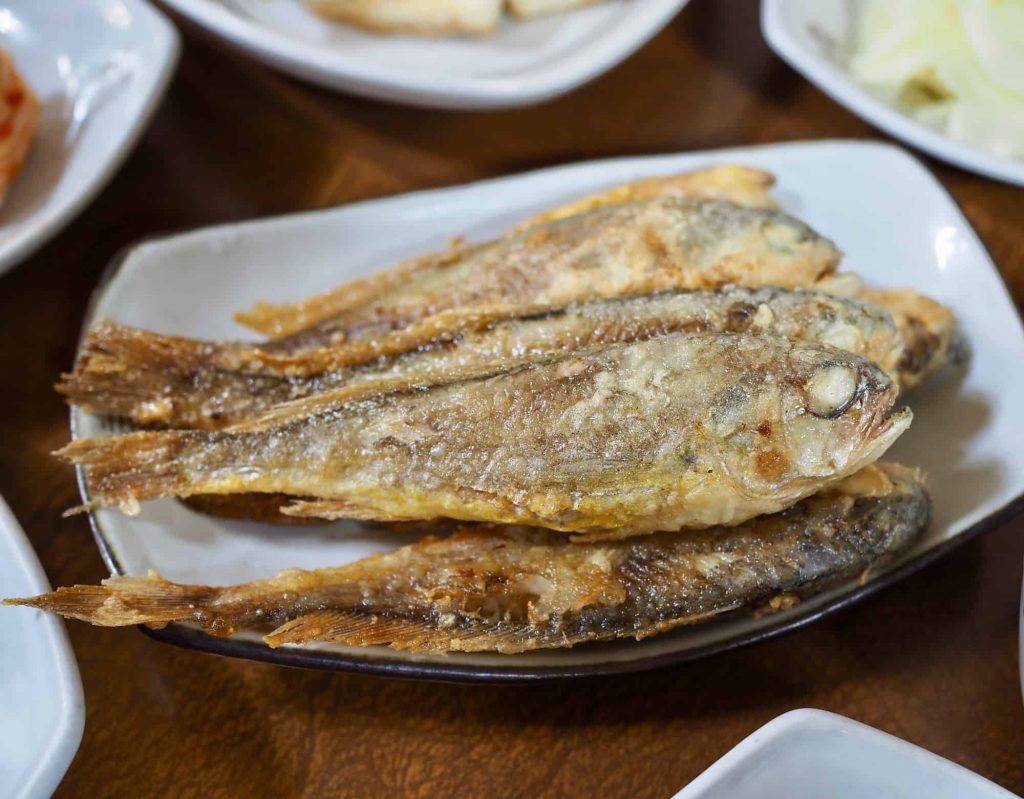
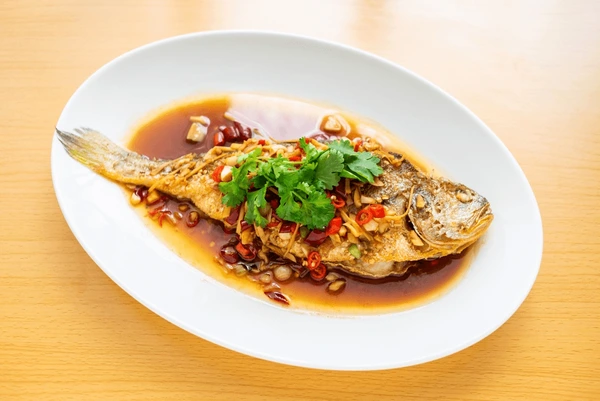
That mildness makes it easy to cook. It takes lemon, herbs, garlic, chilli or a crisp coating without being drowned out, and it is gentle enough for people who don’t usually like fish. In the southern US it is often fried whole or pan-fried. In China and Southeast Asia, close relatives are steamed, braised or fried with a sauce.
The catch is the bones. Croakers are small fish with plenty of fine bones, so they take a bit more care to eat than a boneless cod fillet. More on that below.
What does croaker taste like compared with cod, snapper and whiting?
Croaker sits at the mild, slightly sweet end of white fish. Here is how it lines up against three fish most people have eaten, using NOAA Fisheries’ descriptions for cod, snapper and whiting.
| Fish | Taste | Texture | Best cooking methods |
|---|---|---|---|
| Croaker | Mild and slightly sweet | Lean, tender white flesh, plenty of fine bones | Pan-fry, fry whole, bake, steam |
| Atlantic cod | Mild, clean flavour | Large flakes, less firm than haddock | Batter and fry, bake, poach |
| Red snapper | Sweetly mild but distinctive | Semi-firm, lean and moist | Roast or grill whole, pan-fry fillets |
| Whiting (silver hake) | Mild and slightly sweet | Softer and less flaky than cod | Crumb and pan-fry, bake |
If you like whiting, you will probably like croaker: both are mild, sweet and on the softer side. If you are used to thick cod fillets, expect smaller pieces and more bones, but a very similar clean flavour.
Which croaker are you buying: Atlantic, white or yellow?
“Croaker” covers several different fish, and it matters which one is on your plate.
| Name | Species | Where it comes from | Worth knowing |
|---|---|---|---|
| Atlantic croaker | Micropogonias undulatus | US Atlantic coast and Gulf of Mexico | The croaker most US recipes mean. On the FDA’s Best Choices list. |
| White croaker (Pacific croaker) | Genyonemus lineatus | California coast | On the FDA’s Good Choices list, but under a do-not-eat advisory near Palos Verdes, Los Angeles |
| Yellow croaker | Larimichthys polyactis | Yellow Sea and East China Sea | Popular in Chinese and Korean cooking, sold salted and dried in Korea as gulbi |
Older versions of this page called Atlantic croaker “yellow croaker”. That was wrong: yellow croaker is an Asian species, and the fried yellow croaker in many Chinese restaurants is that fish, not the Atlantic one.
In Australia, the closest relatives are mulloway and the jewfishes, which belong to the same family, Sciaenidae. The Australian Museum notes that fish in this family have been called croakers, drums and jewfishes. They are related, not the same fish.
Caught a spot or a black drum along with your croaker? Here's how croaker, spot and black drum compare on taste, size and cooking.
Why is it called a croaker?
Because it croaks. Texas Parks and Wildlife and Maryland’s Department of Natural Resources both explain that croakers have a large swim bladder and special muscles that vibrate against it, producing a croaking or drumming sound, especially around spawning.
Atlantic croaker are usually about 30 cm (12 inches) long and weigh 225 g to 900 g (half a pound to two pounds), according to Texas Parks and Wildlife, though they can reach about 1.8 kg (4 lb). They have small barbels on the chin, which is one way to tell them from the similar-looking spot. Their freshwater cousin, the freshwater drum, is the fish sold in the US South as gaspergou.
How do you prepare a whole croaker?
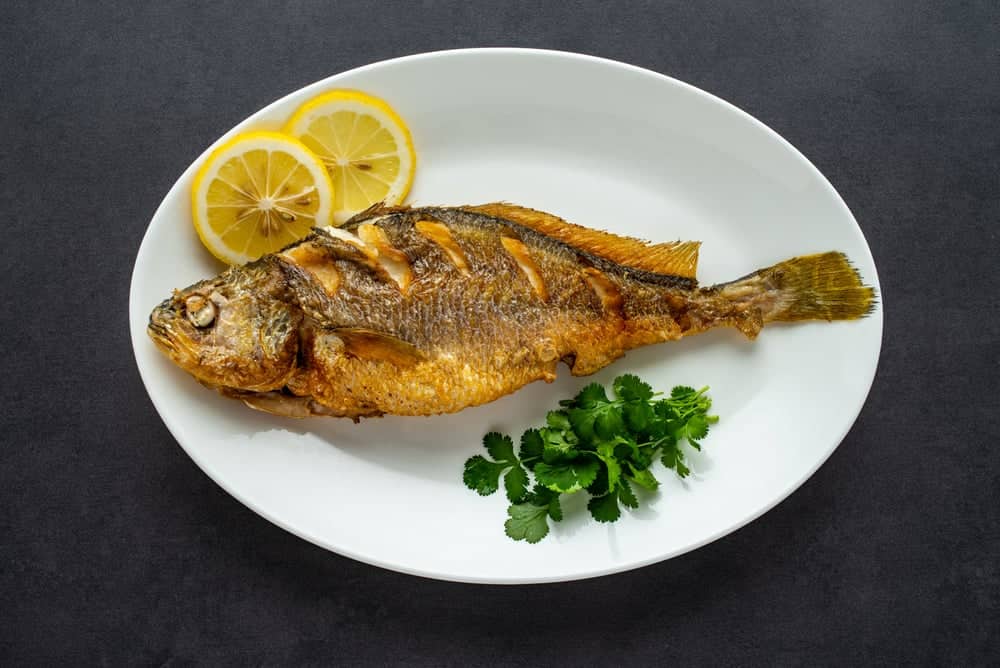
Most croaker is sold whole, so you will usually need to scale and gut it, or ask the fishmonger to. Scrape the scales off from tail to head under running water, cut along the belly, remove the insides and rinse the cavity. Cutting two or three shallow slashes into each side helps it cook evenly.
Croaker has a lot of small bones. Filleting a small fish is fiddly, so many people cook it whole and lift the flesh off the frame at the table, which leaves most of the bones behind. Frying a small croaker until crisp softens the finest bones at the edges. If you are serving guests or children, tell them there are bones and serve it with plenty of time to eat carefully.
How to cook croaker
Whatever the method, croaker is done when the flesh turns opaque and flakes easily, and USDA’s safe minimum internal temperature for fish is 63°C (145°F). Croaker is lean, so it dries out quickly once it passes that point. Raw croaker can carry parasites, so cook it through rather than serving it rare.
| Method | Temperature | Rough time | Notes |
|---|---|---|---|
| Pan-fry fillets | Medium-high heat | 3 to 4 minutes a side | Pat dry first so the skin crisps |
| Fry whole small croaker | Oil at about 175°C (350°F) | 5 to 7 minutes | Dust in seasoned flour or cornmeal first |
| Bake fillets | 190°C (375°F) | 15 to 20 minutes | Brush with oil or butter so they don’t dry out |
| Bake or roast whole | 200°C (400°F) | 20 to 25 minutes | Slash the sides; check at the thickest point |
| Steam whole | Boiling water underneath | 8 to 12 minutes | The usual Chinese method, with ginger and spring onion |
| Grill fillets | Medium heat | 3 to 5 minutes a side | Use a fish basket, as the flesh is tender |
These times are guides for a typical 30 cm fish or fillets about 2 cm thick. Thicker fish need longer, so check the temperature or the flake rather than relying on the clock.
Croaker recipe ideas
- Baked croaker with herbs. Season with salt, pepper, thyme and parsley, then bake at 190°C (375°F) for about 20 minutes, until the flesh flakes.
- Grilled croaker with lemon and garlic. Marinate fillets briefly in olive oil, lemon juice, garlic and rosemary, then grill over medium heat.
- Pan-fried croaker in butter. Fry fillets in butter or olive oil for 3 to 4 minutes a side and finish with lemon.
- Stir-fried croaker. Cut into pieces and stir-fry with ginger, garlic, soy sauce and bok choy or capsicum. Serve with steamed rice.
- Roast croaker with tomatoes and olives. Lay fillets over cherry tomatoes, olives and capers with a drizzle of olive oil and roast until tender.
- Croaker with chilli and garlic. Sauté with chopped chilli, garlic and a splash of white wine, and serve with bread or rice.
- Croaker fish and chips. Dip fillets in a light beer batter and deep-fry until golden. Serve with chips and tartare sauce.
- Croaker tacos. Grill or bake the fish, flake it into soft tortillas and top with avocado, salsa and shredded cabbage. If you like that, our guide to the top 10 Mexican foods has more ideas.
Is croaker safe to eat, and how much mercury does it have?
Atlantic croaker is on the US Food and Drug Administration’s Best Choices list, the group lowest in mercury, which the FDA says can be eaten two to three times a week. White croaker from the Pacific is on the Good Choices list, a step up in mercury, which the FDA suggests eating about once a week.
There is one local exception worth knowing. Near the Palos Verdes Shelf off Los Angeles, white croaker carries high levels of DDT and PCBs from historic industrial waste, and California has a do-not-eat advisory for white croaker caught there, according to the US Environmental Protection Agency. If you fish in Southern California, check local advice before keeping white croaker.
Wherever it comes from, cook croaker to 63°C (145°F) to deal with any parasites.
What’s in croaker?
USDA FoodData Central figures for Atlantic croaker per 100 g, raw and breaded and fried. Frying adds most of its fat from the oil and coating rather than the fish.
| Per 100 g | Raw | Breaded and fried |
|---|---|---|
| Energy | 104 kcal | 221 kcal |
| Protein | 17.8 g | 18.2 g |
| Fat | 3.2 g | 12.7 g |
If you want to keep it lighter, baking, steaming or grilling keeps the fat close to the raw figure.
FAQs
Which is better, croaker or tilapia?
It comes down to taste. Both are mild white fish. Croaker is a wild-caught saltwater fish with a slightly sweet flavour and more bones, while most tilapia sold is farmed freshwater fish sold as boneless fillets. If bones put you off, tilapia is easier; if you want more flavour, try croaker.
Is croaker an expensive fish?
Usually not, though prices depend on where you buy. Atlantic croaker has long been a high-volume commercial fish, but US commercial landings have fallen sharply, from 47 million pounds in 2003 to about 506,000 pounds in 2023, according to the Atlantic States Marine Fisheries Commission. The expensive croaker you may hear about is gulbi, salted and dried Korean yellow croaker, which is a different species.
Is croaker the same as jewfish or mulloway?
No, but they are relatives. Mulloway and the jewfishes belong to the same family, Sciaenidae, as croakers and drums. They taste broadly similar, but mulloway grows much larger than croaker.
Can you eat croaker raw?
It isn’t recommended. Croaker can carry parasites, and it is not a fish sold for sushi or sashimi. Cook it to an internal temperature of 63°C (145°F).
What do you serve with croaker?
Lemon, a green salad, chips, rice or coleslaw all work. For more ideas, see our guide to what to serve with fish.
If you like trying less common fish, see what Hawaiian papio tastes like and whether catfish have scales.
Next read: croaker vs spot vs black drum, and which tastes best.
Sources
- Atlantic croaker species profile, Texas Parks and Wildlife Department
- Atlantic croaker, Atlantic States Marine Fisheries Commission
- Croaker fact sheet, Virginia Seafood
- Advice about eating fish, US Food and Drug Administration
- Safe minimum internal temperature chart, USDA Food Safety and Inspection Service
- Palos Verdes Shelf fish contamination fact sheet, US Environmental Protection Agency
- Atlantic cod, red snapper and silver hake (whiting) seafood profiles, NOAA Fisheries
- Fish, croaker, Atlantic, raw (FDC 174192), USDA FoodData Central
- Sciaenidae: jewfishes, croakers and drums, Australian Museum