
Gut-Loving Herb Pesto, Trish's Way

By Trish Tucker-May
Nutritionist and gut health expert · 17 September 2026
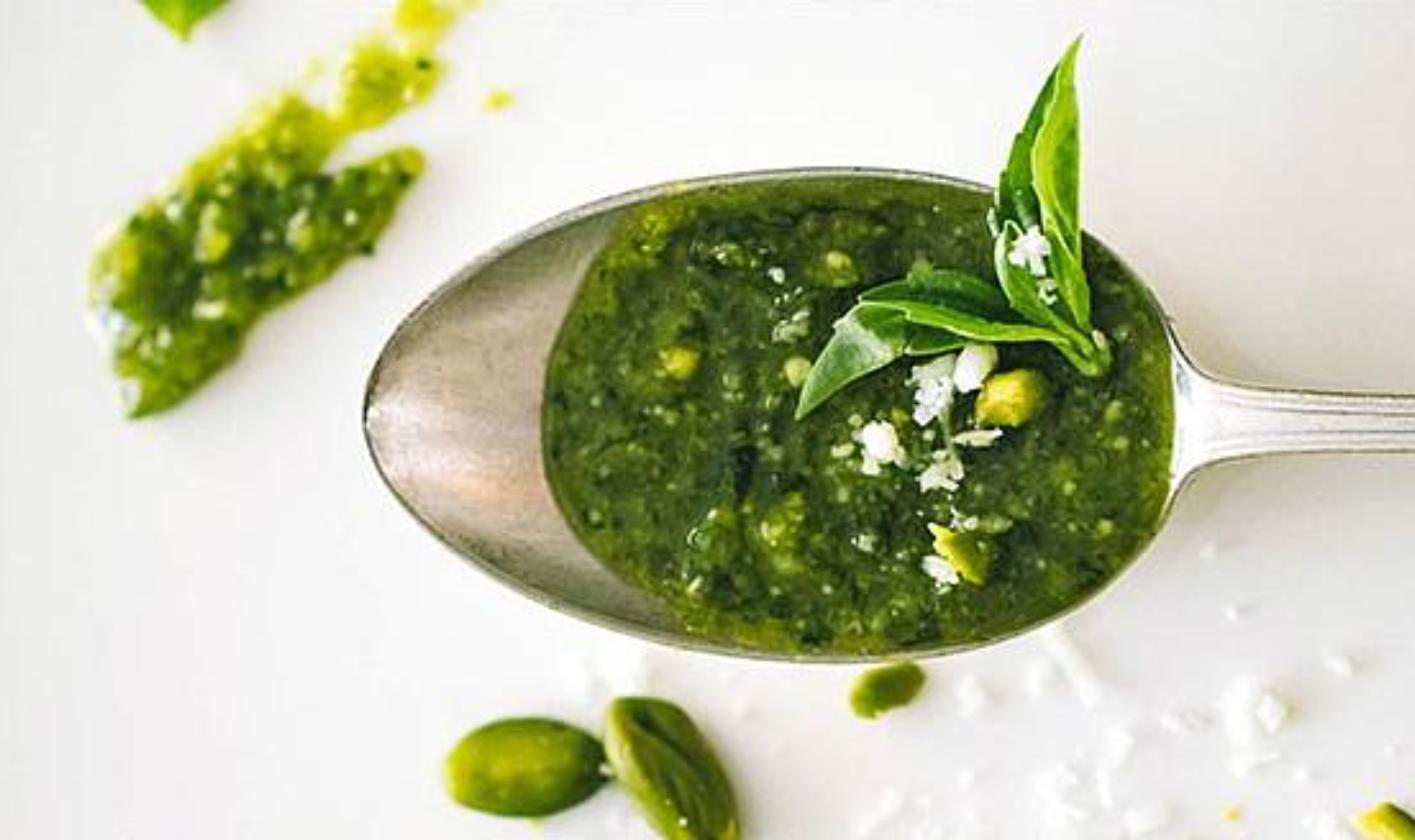
This is a raw herb pesto: whatever fresh herbs you have, ground with olive oil, garlic, nuts and a little tamari or miso, kept in a jar and spooned over food at the table rather than cooked into it. Fifteen minutes and dairy-free. It is not a pesto in the classic basil-and-parmesan sense, and it is not meant to be.
Why I make it this way
It is a method I use to get more fresh herbs into my week without adding another dish to plan around. Herbs such as rosemary, thyme, basil, parsley, coriander, oregano, chives, sage and garlic are rich in polyphenols, the plant compounds behind their sharper flavours. Herbs and garlic have long been used for their antimicrobial and gut-supportive properties, and blending them raw into oil is a simple way to eat more of them, rather than treating them as a garnish. This is a way of eating well, not a treatment for any condition, and results vary from person to person.
What you need
- 150ml olive oil
- 1 clove garlic
- A handful of fresh herbs, whatever is on hand
- ¼ cup raw cashews or pine nuts
- ½ teaspoon tamari, or ½ teaspoon brown rice miso paste
- A pinch of red chilli powder (optional)
- A squeeze of half a lemon, or 1 drop of food-grade lemon essential oil
- Salt and pepper, to taste
Method
- Roughly chop the herbs and garlic if you are working without a food processor.
- Blend the herbs, garlic, nuts, tamari or miso, chilli and lemon with the olive oil in a herb grinder or food processor until you have a rough, runny paste. A mortar and pestle does the job too, or the rounded end of a rolling pin in a bowl.
- Season to taste with salt and pepper.
- Spoon into a jar. It will keep at room temperature for a couple of days, then move it to the fridge.
A few of Trish’s go-to blends
- Sage, thyme and cumin seeds, ground separately first so they are as fine as possible, then blended with the fresh herbs, oil and a pinch of sea salt.
- Oregano, parsley, basil and garlic, with a little red chilli and a teaspoon of brown rice miso paste.
- Turmeric root, chives and rosemary, with a touch of tamari.
Serving it
Spoon a teaspoon or two over salads or finished dishes rather than cooking it in. Adding it raw, after the heat, keeps more of the herbs’ natural compounds intact than stirring it through a hot pan.
Leave out the nuts if you need to, and if you are watching sodium, cut back the tamari or miso and lean on extra lemon and herbs instead.
Common questions
How long does this pesto keep?
A couple of days at room temperature, then move it to the fridge. Because it is raw and has no cooking step, it does not keep as long as a jar of shop-bought pesto with preservatives in it.
Can I freeze it?
Yes, and an ice cube tray is the practical way: freeze it in portions, then take out a cube at a time. Do note that freezing softens the fresh, sharp quality that makes the raw version worth making.
Which herbs work best?
Rosemary, thyme, basil, parsley, coriander, oregano, chives and sage all work, and so does a mix. The recipe is built to use whatever is already in the fridge or the garden, so there is no wrong combination.
Why add it raw instead of cooking with it?
Spooning it over a finished dish, after the heat, keeps more of the herbs’ natural compounds intact than stirring it through a hot pan. It also tastes noticeably fresher.
Can I make it without a food processor?
Yes. A mortar and pestle does the job, and so does the rounded end of a rolling pin in a bowl. Chop the herbs and garlic roughly first if you are working by hand.
What if I cannot eat nuts?
Leave them out. The pesto will be thinner and less rich, and you may want slightly less oil to compensate, but it still works.
Is this low FODMAP?
No, because of the garlic. Garlic is high FODMAP and there is a whole clove in here. Leaving it out changes the flavour a good deal, and garlic-infused oil is the usual workaround, though anyone following the plan properly should check substitutions with a dietitian.
How much should I use?
A teaspoon or two over a salad or a finished dish is the serve I use. It is concentrated and it is mostly oil, so it goes further than you expect.
Can I cut the salt down?
Yes. Reduce the tamari or miso and lean on extra lemon and herbs instead, which keeps the flavour lively without the sodium.
More from Trish
Trish’s soothing green smoothie takes the same pared-back approach at breakfast, and her roasted pumpkin, lentil and tahini bowl is the kind of meal this pesto was made to sit on. Her expert page collects the rest of her writing here, and the gut and digestion index has the food-by-food answers, including why olives and olive oil bother some people.
About Trish
Trish Tucker-May is a Registered Nutritionist, a member of the Federation of Nutritional Therapy Practitioners (UK), and author of Nourish Your Gut For A Positive Menopause. She works with women over 40 on gut health and hormonal balance. Read more on her expert page, or find her at www.trishtuckermay.com.
Nutrition information on Cuisine Seeker is general in nature and is not a substitute for advice from your GP or an accredited practising dietitian.
Keep reading: Trish Tucker-May on gut health All the gut and digestion answers on this site