
Does Kimchi Give You Gas + Make You Fart? Here's Why
Kimchi does give a lot of people gas, and it is the ingredients rather than the fermenting that usually does it. Onion, radish, cabbage and sometimes pear are all gas-producing foods, and they are the base of most kimchi. The chili adds to it by speeding food through the gut, and the fermentation itself releases carbon dioxide.
None of that means something is wrong. Below is which part of the jar is doing it, what you can change if you make your own, and when a reaction is worth raising with a doctor.
Can Kimchi Give You Gas?
Before anything else, let’s describe what kimchi is. Kimchi is a fermented food made with vegetables. Among the bacterial species in kimchi is lactobacillus, a probiotic.
In previous studies, lactobacillus content was found to increase when more garlic was added. In contrast, the lactobacillus content decreased when more red pepper was added (source: Nutrients).
According to another study, gas and bloating are linked to small intestinal bacterial overgrowth (SIBO) and D-lactic acidosis from probiotic consumption (source: Clinical and Translational Gastroenterology).
However, the participants in this study mostly took probiotic supplements, not probiotics from cooked food.
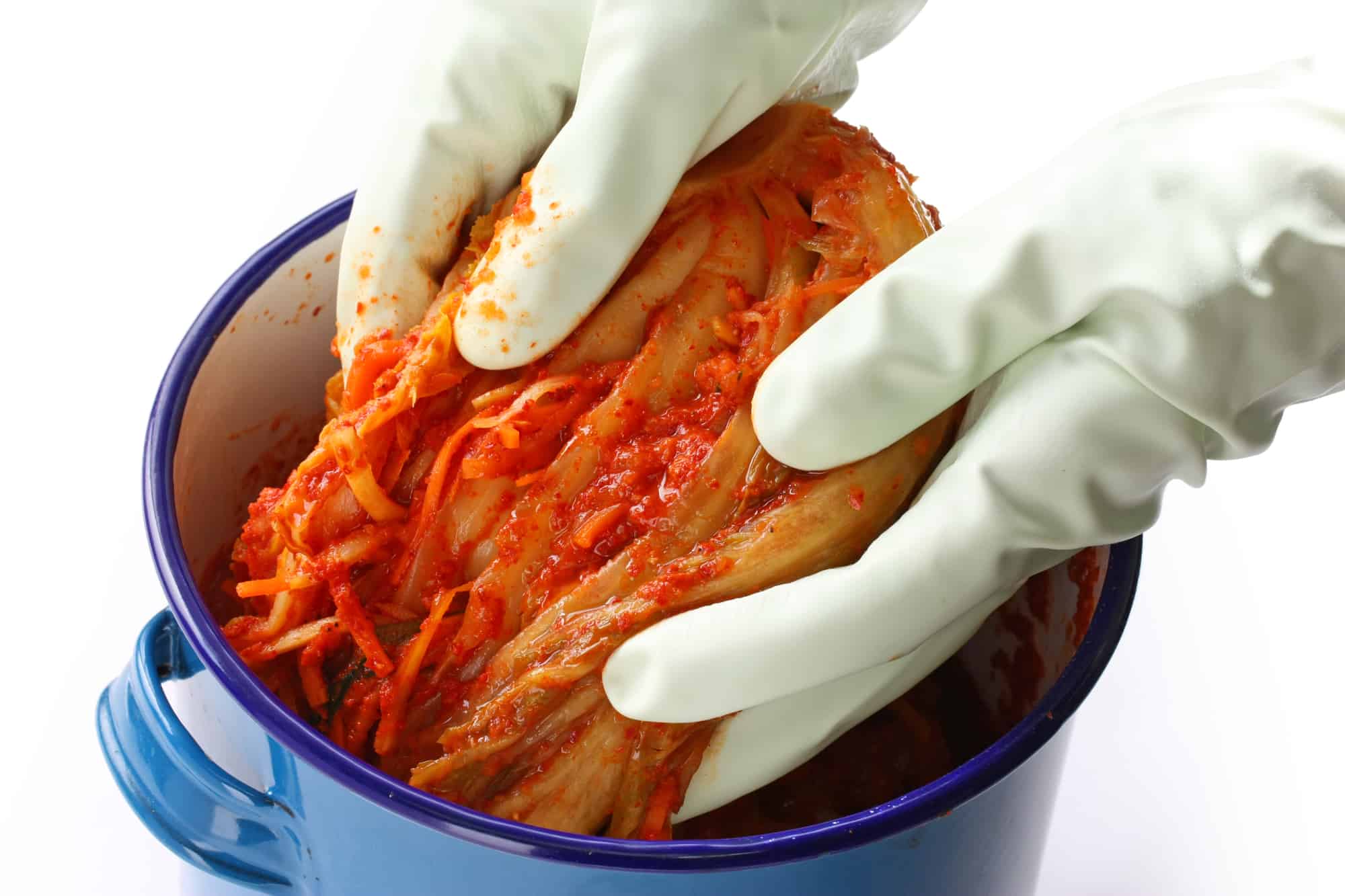
In kimchi, the vegetables don’t have as much sugar as some other fermented foods. The glucose molecules from the vegetables get converted into lactic acid, ethanol, and carbon dioxide. Carbon dioxide can cause gas and bloating. (source: Vegetable Fermentations).
Why Does Kimchi Give Me Bad Gas?
Fermented foods like kimchi are abundant in probiotics. Probiotics are non-pathogenic microorganisms known for their well-researched health benefits. While they can be healthy and effective in promoting good gut health, they’re not for everyone.
Some people who consume probiotic-rich foods like kimchi don't always have the best reactions. Moreover, consuming too much can cause gas, stomach pain, and even diarrhea (source: UC Davis Department of Nutrition).
Kimchi also contains garlic and onion. Garlic promotes lactobacillus production. Onion is also listed as a gas-promoting food (source: Gastroenterology & Hepatology).
Pears, which are sometimes used to make kimchi, contain sugars that may result in gas (source: National Institute of Diabetes and Digestive and Kidney Diseases), while cabbage and radishes are also great gas producers.
Hot and spicy kimchi can also cause gas. This is because hot and spicy ingredients make the movement in the gut faster than it should be. The fast movement causes gas to be produced (source: University of Michigan).
If you make homemade kimchi, you can choose to add fewer onions and radishes, pass over the pear, and don’t add too many spices and chili peppers.
Another tip is to eat slowly. Eating fast can make you swallow additional air and exacerbates gassiness.
Does Kimchi Cause Smelly Gas or Farting?
As mentioned above, kimchi contains gas-producing foods like onion, radish, cabbage, and pear. Some kimchi also contains spices and chilies, which make the movement in the gut faster than normal and this creates gas.
Usually, this is not a case of concern for many people. But hot and spicy foods on their own, especially for the uninitiated, can cause discomfort in the stomach.
However, if you keep eating kimchi and still get a bad reaction every time, we recommend asking your doctor about it, especially if you also have abdominal pain, constipation, or diarrhea to make sure there are no underlying conditions.
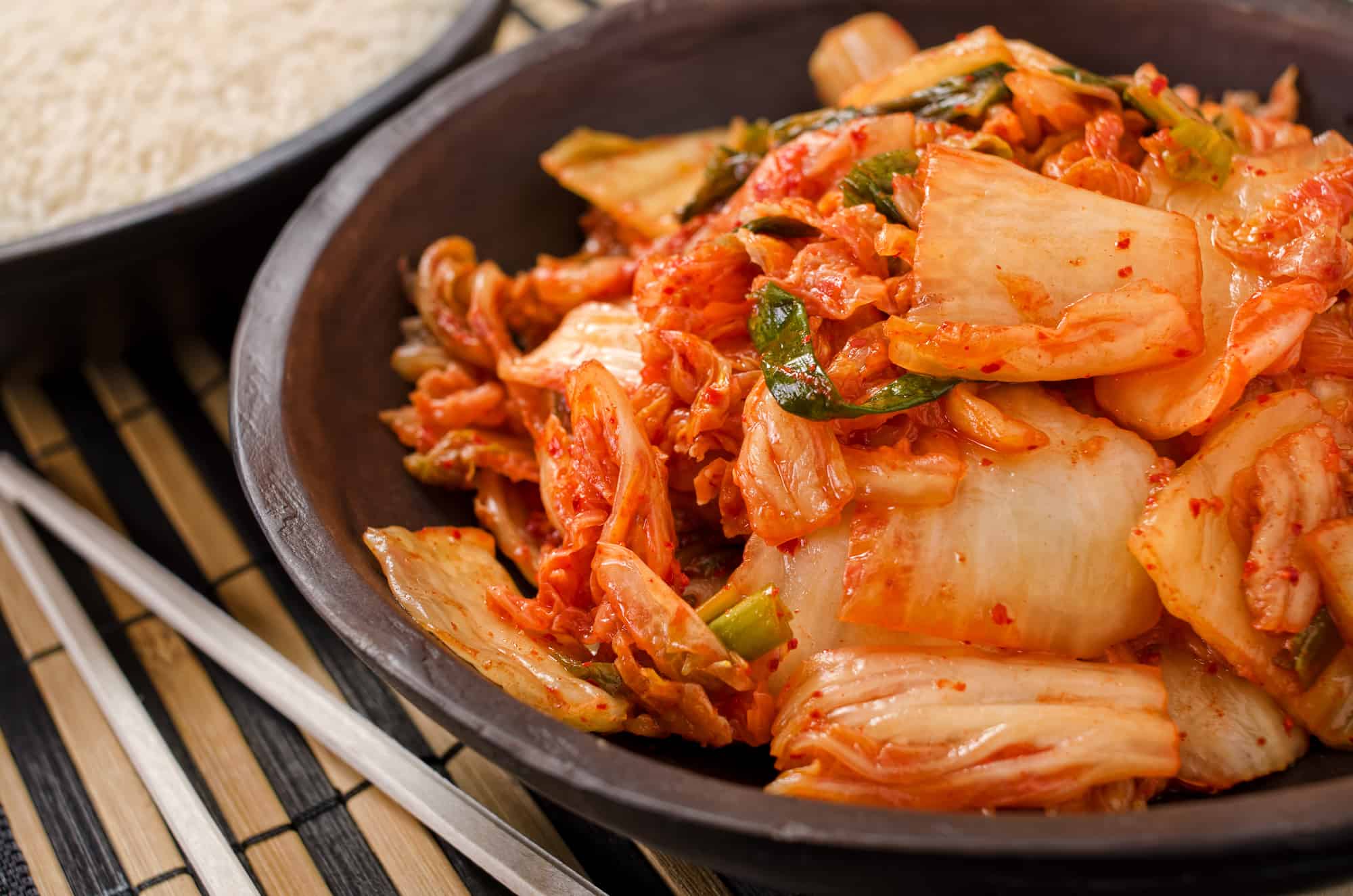
Some prevalent medical causes of gas are:
- Gastroesophageal reflux disease (GERD)
- Irritable bowel syndrome (IBS)
- Lactose intolerance
- Bacterial overgrowth in small intestines
- Constipation
- Gastroparesis
- Overeating
- Body weight gain
- Swallowing air
Other severe causes include:
- Dumping syndrome
- Celiac disease
- Ascites
- Tumors
- Digestive tract obstruction
- Stomach cancer
- Colon cancer
- Ovarian cancer
- Insufficient digestive enzymes (pancreas not producing enough)
(source: MedlinePlus, National Institute of Diabetes and Digestive and Kidney Diseases)
If you have kimchi for a meal, try not eating other fermented foods to see if kimchi is the cause of your gas or bloating.
Common Questions About Kimchi And Gas
How long after eating kimchi does the gas start?
It depends on which part of the jar is causing it. Swallowed air and the carbon dioxide from fermentation show up quickly, while the onion, cabbage and radish are fermented by bacteria further down and take longer. That is why a late reaction does not rule kimchi out as the cause.
Does homemade kimchi cause less gas than shop-bought?
It can, because you control what goes in. Using fewer onions and radishes, leaving out the pear and going lighter on the chili and spices all reduce the gas-producing ingredients. Shop-bought kimchi is usually built for flavour rather than for a sensitive gut.
Does cooked kimchi cause less gas than raw?
Cooking kills much of the live bacteria, so kimchi jjigae or fried rice made with kimchi is gentler on that front. The onion, cabbage and radish are still there though, and those are the bigger gas producers, so cooking helps some people and not others.
Is kimchi gas a sign the probiotics are working?
Not exactly. Gas from kimchi mostly comes from the vegetables and the carbon dioxide of fermentation rather than from the probiotics doing something useful. Probiotics are well studied and many people do fine on them, but too much can cause gas, stomach pain and diarrhea in its own right.
Why does kimchi make my gas smell bad?
Kimchi is built on vegetables that are known gas producers, and the smell tends to track what your gut bacteria are fermenting rather than the kimchi itself. Garlic is the other factor, since it is in most recipes and also promotes lactobacillus growth.
Can I eat kimchi if I have IBS?
Some people with IBS tolerate it and some do not, and the onion and cabbage are the usual sticking points since both are high FODMAP. This is worth working through with a GP or dietitian rather than guessing, because IBS management is quite individual.
How much kimchi is a reasonable serve?
Kimchi is a side dish in Korean cooking rather than a main, and a few forkfuls alongside a meal is the traditional amount. Starting small and building up gives your gut time to adjust, which is generally easier than starting with a full bowl.
Does eating kimchi slowly help?
It does help with one part of it. Eating fast means swallowing more air, and that air has to come out somewhere, so it adds to whatever the vegetables are already doing. Slowing down will not change the fermentation side, but it is a free thing to try.
When should I see a doctor about it?
If you keep eating kimchi and get a bad reaction every time, particularly alongside abdominal pain, constipation or diarrhea, it is worth asking your doctor to rule out an underlying cause. Persistent gas has a long list of possible reasons and most of them are not the food.
Where To Go Next
Trish Tucker-May covers the food side of gut health on this site, and working out which ingredient in a dish is the problem is exactly what her page goes into. If you are trying to keep fermented food in the week without the aftermath, her gut-loving herb pesto is a gentler way to get flavour into a meal.
Kimchi is rarely the only food doing this. Spinach, peanuts and olives come up for related reasons, and the gut and digestion index has the rest of them answered food by food.
Keep reading: Trish Tucker-May on gut health All the gut and digestion answers on this site