
Does Spicy Food Trigger Hot Flashes?
The short answer
For many women, yes. Capsaicin, the compound that makes chilli hot, activates a heat receptor in the body and starts you sweating even though nothing has actually got warmer. During menopause, when the brain's comfortable temperature range has narrowed, that is often enough to tip into a flush. The effect is dose related, so hotter means more likely.
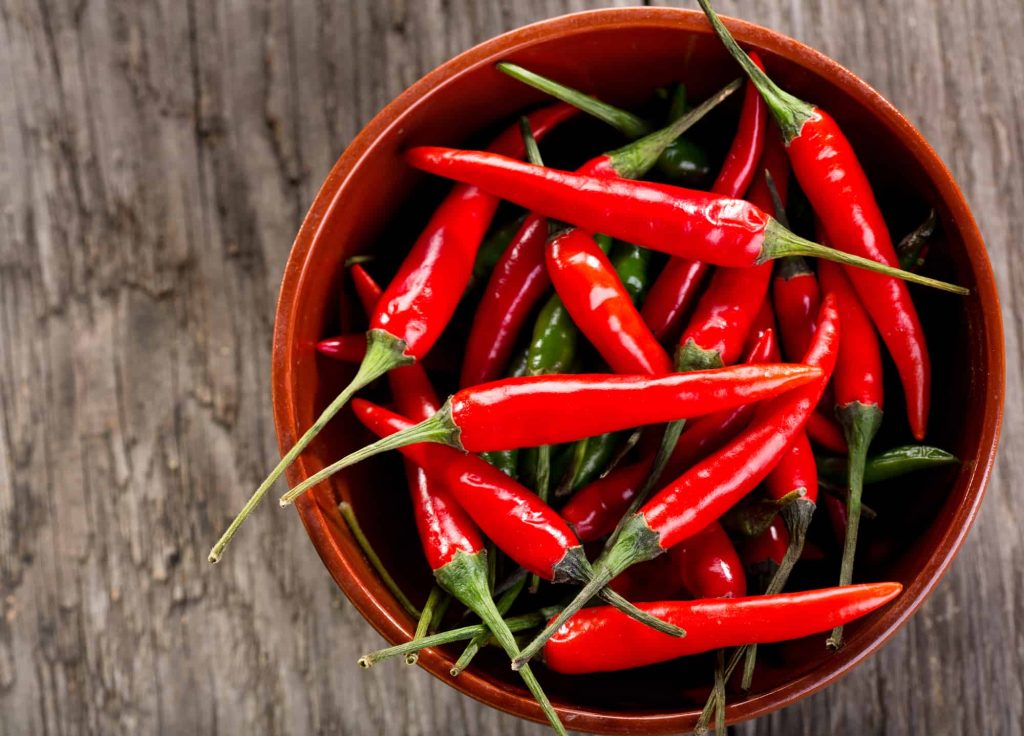
Spicy food sits on every hot flash trigger list, and unlike some of the others it has a mechanism you can describe in one sentence. That makes it one of the easier triggers to test and one of the easier ones to adjust without giving anything up entirely.
Why does chilli set off a flush?
Capsaicin binds to a receptor called TRPV1, which is the same receptor that responds to actual heat. Your nervous system cannot tell the difference between a genuinely hot mouthful and a chemically hot one, so it responds the same way: you flush, you sweat, your heart rate lifts.
In other words, chilli produces a small, real thermoregulatory event. During menopause, the range of body temperature your brain treats as comfortable gets narrower, so a smaller push is needed to trigger the full flush. Chilli supplies exactly that push.
Is it the spice or the temperature of the food?
Both, and they are worth separating.
A steaming bowl of anything raises your core temperature slightly. A cold dish with plenty of chilli in it raises your skin temperature by a different route. A hot curry does both at once, which is why it gets named more often than either alone.
If you want to know which is doing the work for you, eat the same spice level cold for a week. A fresh salsa or a cold noodle salad tells you a lot.
Does the type of chilli matter?
The heat level matters more than the variety. Capsaicin content is what drives the response, and that is roughly what the Scoville scale measures.
A little context: jalapeños sit at a few thousand Scoville units, cayenne and Thai bird’s eye in the tens of thousands, habanero and scotch bonnet in the hundreds of thousands. The jump between those tiers is much larger than it feels at the table.
Black pepper, mustard and horseradish work through different compounds altogether. Some women find them milder to handle, others find wasabi and horseradish just as provoking. Worth testing separately rather than assuming.
How do you test spicy food properly?
Two weeks, as with any trigger, and dose it rather than banning it.
- Track a normal week. What you ate, roughly how hot it was, and how the next hour went.
- For week two, drop the heat by about half. Keep the same meals, use less chilli. This tests the dose rather than asking you to change what you cook.
- Compare. If symptoms ease, you have a trigger and a dial rather than a switch.
- Put a hot meal back deliberately, early in the day. If it flushes you at lunchtime, you have confirmed it, and you have also learned that timing gives you room to move.
Can you keep the flavour without the heat?
Yes, and this is where most of the practical ground is. Heat and flavour get treated as the same thing and are not.
Smoked paprika, cumin, coriander seed, garlic, ginger, lemongrass, tamarind and fish sauce all build depth without capsaicin. Sweet paprika gives you the colour of a chilli dish with none of the burn. Removing seeds and white pith from fresh chillies cuts the heat substantially while keeping the fruit flavour.
If you cook for a household, cooking the base mild and adding chilli oil or fresh chilli at the table lets everyone else have theirs hot.
Does timing help?
It does. A hot flash at lunchtime is an inconvenience. The same flush at 9pm rolls into a broken night, because it lands near bedtime and night sweats and disrupted sleep feed each other.
Many women find they can keep spicy food entirely by moving it to the middle of the day. That is a much smaller change than giving it up, and it is worth trying first.
Does spicy food do anything good during menopause?
Capsaicin has been studied for various effects, most of them modest and none of them a reason to eat chilli you do not enjoy. Spicy food also tends to slow eating down and increase satiety a little, which some women find useful.
The more honest point is that a food you enjoy is not automatically a problem to be solved. If chilli is not flushing you, there is no menopause reason to avoid it.
Common questions
How soon after eating spicy food does a hot flash start?
Usually quickly, within minutes to about half an hour, because capsaicin acts directly on the heat receptor. A delayed flush hours later is more likely to have another cause.
Does dairy help stop the burn?
Yes. Casein in milk and yoghurt binds capsaicin and carries it away, which is why raita and lassi sit alongside hot curries traditionally. Water spreads it around instead.
Are chilli supplements or capsaicin capsules a problem?
They concentrate the same compound, so if chilli is a trigger for you, a supplement is a plausible one too. Supplements are a conversation for your doctor rather than a food article.
Will spicy food make night sweats worse?
If eaten in the evening, it may well contribute, for the timing reason above. Moving spicy meals earlier in the day is the change most likely to help without costing you anything.
Is it a trigger for everyone?
No. Plenty of women eat chilli right through menopause without noticing a change. Trigger lists are population level, and you are one person, which is why a two-week test on yourself beats any list.
What if everything seems to trigger a flush?
That is worth raising with your doctor rather than working through alone by elimination. Cutting out food after food tends to end with a narrow diet and no clear answer, and there are management options worth discussing.
Where this leaves you
Spicy food is one of the more predictable triggers and one of the most adjustable. The heat is a dial, not a switch, and the time of day you eat it matters nearly as much as how hot it is.
Registered Nutritionist Trish Tucker-May is the author of Nourish Your Gut For A Positive Menopause, and the menopause and food guide answers the other trigger questions one at a time.
If hot flashes are frequent enough to disrupt your sleep or your working day, that is worth a conversation with your doctor. Nothing here is a substitute for it.
Keep reading: Meet Trish Tucker-May Menopause and food, answered question by question