
Can You Reuse Hot Pot Broth? Fridge, Freezer and Safety Guide
The short answer
Yes, you can reuse hot pot broth, but only if it stayed hot during the meal, was not contaminated from personal bowls or utensils, and was cooled and refrigerated within two hours. Strain it, bring it back to a rolling boil before serving, and use refrigerated broth within three to four days of the original meal.
If raw meat or seafood sat in lukewarm broth, the pot was left out for more than two hours, or diners poured used dipping sauce or half-eaten food back into it, throw the broth away. Boiling can kill many bacteria, but it cannot reliably undo every mistake made during storage.
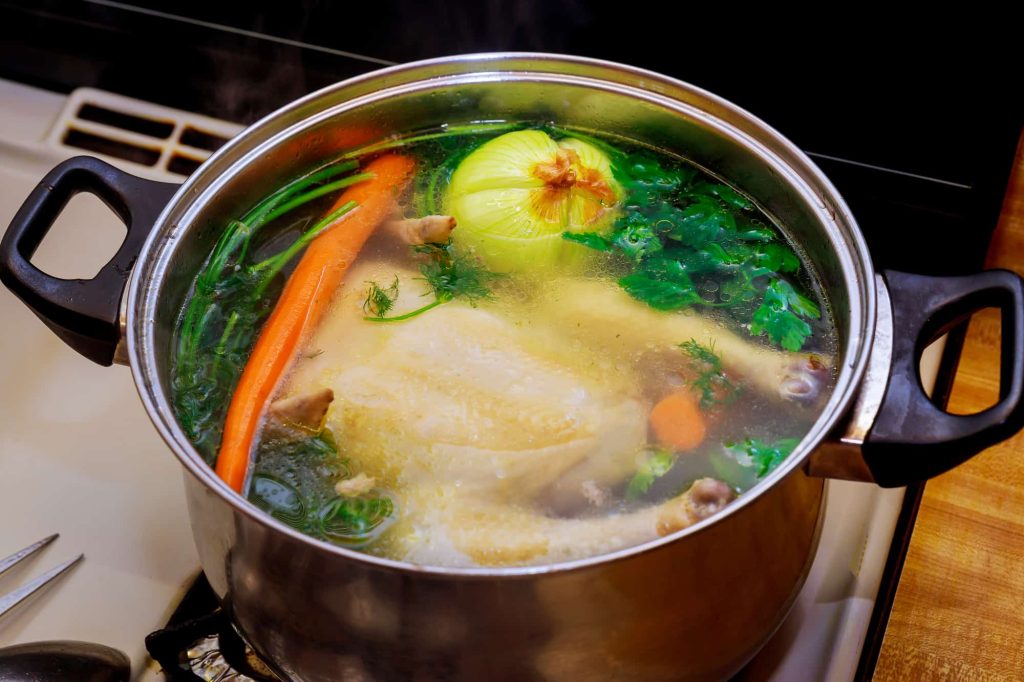
Hot pot is one of the great shared meals, and Sichuan hot pot in particular leaves you with a pot of broth that has been building flavour all night. Throwing that out feels wasteful. Often you do not have to.
Can You Reuse Hot Pot Broth Safely?
Hot pot broth can be reused when it has been treated like any other cooked leftover. The important questions are not whether the broth still looks clear or smells good. They are how hot it stayed, what went into it and how quickly it was chilled.
A shared hot pot usually remains at a simmer, which helps keep it hot enough during the meal. Raw ingredients are cooked in the broth, so the liquid also picks up fat, starch, seasoning and small food particles. That can make the second batch richer, but it means the broth needs careful handling.
Keep the broth only when all of these are true:
- It remained actively simmering while raw ingredients were being cooked.
- Meat, poultry and seafood were cooked fully before being eaten.
- Nobody returned food from a personal bowl to the communal pot.
- Used chopsticks, spoons and dipping sauces did not repeatedly contaminate the broth.
- The broth was refrigerated within two hours after cooking ended.
- It will be reheated thoroughly before it is served again.
A separate pair of cooking chopsticks or tongs makes hot pot safer. It also avoids carrying raw-meat juices to food that is ready to eat.
If you are unsure whether the pot ever really held a simmer, our guide to simmering with the lid on or off covers what a proper simmer looks like.
When Should You Throw Hot Pot Broth Away?
Discard the broth if it spent more than two hours at room temperature. If the room or outdoor temperature was above 32°C/90°F, that limit falls to one hour. These limits come from USDA guidance for perishable leftovers (source: USDA Food Safety and Inspection Service).
You should also throw it out when:
- The heat was turned off for a long stretch while raw food remained in the pot.
- Raw chicken, meat or seafood was added near the end and you are unsure it cooked fully.
- Diners drank from spoons and returned them to the broth.
- Leftovers or dipping sauce from individual bowls were tipped back into the pot.
- You cannot remember when the broth was made or how long it has been refrigerated.
- It has an unusual sour smell, mould, bubbling while cold or a slimy texture.
Do not use smell or appearance as your only safety test. Harmful bacteria do not always change the look, taste or smell of food. If the handling history is doubtful, the safest answer is to discard it.
How Long Does Hot Pot Broth Last in the Fridge?
Hot pot broth lasts three to four days in a refrigerator at 4°C/40°F or below. Count from the day of the original hot pot meal, not from the day you reboil it. Reheating does not restart the storage clock.
For example, broth made on Saturday should be used by Tuesday or Wednesday at the latest, provided it was cooled and refrigerated promptly. If you will not use it within that window, freeze it as soon as possible.
Label the container with the date. This removes the guesswork later, especially when several soups and sauces look alike in the fridge. The same three to four day window applies to most home-made soups, including potato soup in the fridge.
How to Cool and Store Leftover Hot Pot Broth
A deep stockpot cools slowly, and the centre can stay warm for hours. Do not leave the whole pot on the bench waiting for it to reach room temperature.
- Remove any remaining meat, seafood, noodles and vegetables.
- Strain the broth through a fine sieve to catch small food particles.
- Divide it into shallow containers. Smaller portions lose heat faster than one deep pot.
- Refrigerate promptly, and within two hours of cooking ending.
- Once cold, cover the containers tightly and add the date.
Hot food can go directly into the refrigerator in shallow containers. If you have a large amount, place the containers in an ice-water bath and stir the broth to speed cooling before refrigerating.
Store cooked ingredients separately from the broth. Noodles and leafy vegetables become soft if left submerged, while seafood has a shorter quality window than plain broth.
Can You Freeze Hot Pot Broth?
Yes. Freeze strained hot pot broth in airtight containers or freezer bags, leaving a little space for expansion. For best quality, use it within three months. Frozen food kept continuously at -18°C/0°F remains safe for longer, but flavour and texture gradually decline (source: USDA Food Safety and Inspection Service).
Freeze the broth in useful portions. A one- or two-cup portion can become a noodle soup or sauce; a larger container suits another hot pot meal. Avoid freezing cooked noodles, delicate leafy greens or tofu in the broth because their texture often suffers after thawing.
Thaw broth in the refrigerator overnight, in cold water in a leak-proof bag, or in the microwave if you will reheat it immediately. Do not thaw it on the kitchen counter.
How to Reheat Hot Pot Broth Safely
Pour the broth into a clean pot and bring it to a rolling boil. Stir so the whole batch heats evenly. USDA guidance says reheated leftovers should reach 74°C/165°F; soups, sauces and gravies should be brought to a rolling boil.
If you are using it for another hot pot meal, keep it actively simmering as ingredients cook. Add fresh water or unsalted stock if the broth became concentrated during the first meal. Taste before adding salt, chilli paste or soy sauce because yesterday's ingredients may already have intensified the seasoning.
Reheat only the amount you plan to use. Repeated cooling and reheating reduce quality and create more opportunities for unsafe handling. If you are topping the pot up rather than starting again, the same rules that apply to fat and skin in a broth apply here: the richer the liquid, the more it rewards straining before it goes into the fridge.
Frequently Asked Questions
Can you reuse hot pot broth the next day?
Yes, if it stayed hot during the meal and was strained, cooled and refrigerated within two hours. Bring it to a rolling boil before using it the next day.
Can you keep hot pot broth with meat in it?
It is better to remove and store cooked meat separately. This helps the liquid cool quickly and keeps the meat from becoming overcooked when the broth is reheated.
Can you reuse broth that cooked raw meat?
Yes, provided the broth remained at a simmer, the raw meat was fully cooked and the broth was handled as a cooked leftover. Discard it if raw food sat in lukewarm liquid or if you are unsure about the cooking temperature.
Can you reheat hot pot broth twice?
It can be safe if it is cooled and reheated correctly each time, but reheating only the portion you need is the better practice. Each extra cycle reduces quality and adds another chance for unsafe handling.
Does boiling old broth make it safe?
Not always. Boiling kills many bacteria, but it does not guarantee that broth mishandled for hours is safe. Some bacteria can produce heat-stable toxins. When the time or storage history is uncertain, throw it away.
The Short Answer
You can reuse hot pot broth when it stayed simmering, avoided contamination and reached the fridge within two hours. Keep it chilled for no more than three to four days from the original meal, or freeze it for best quality within three months. Strain it, reheat it to 74°C/165°F and bring it to a rolling boil before serving.
If you are planning the next one, our guide to hot pot at home covers the setup, the cooking times and the dipping sauces, and the hot pot ingredients list has what to buy and how much of it.