
Hot Pot Ingredients List: What to Buy
The short answer
A hot pot ingredients list needs six things: broth, thinly sliced protein, tofu or hot pot balls, mushrooms and vegetables, a noodle or other starch, and dipping sauces. For four people, buy one or two broths, two proteins totalling 600 to 800g, five or six vegetable and tofu items, one noodle and three or four sauces.
You do not need every item in every category. The best hot pot spread is varied rather than huge: something rich, something fresh, something chewy and something that soaks up the broth.
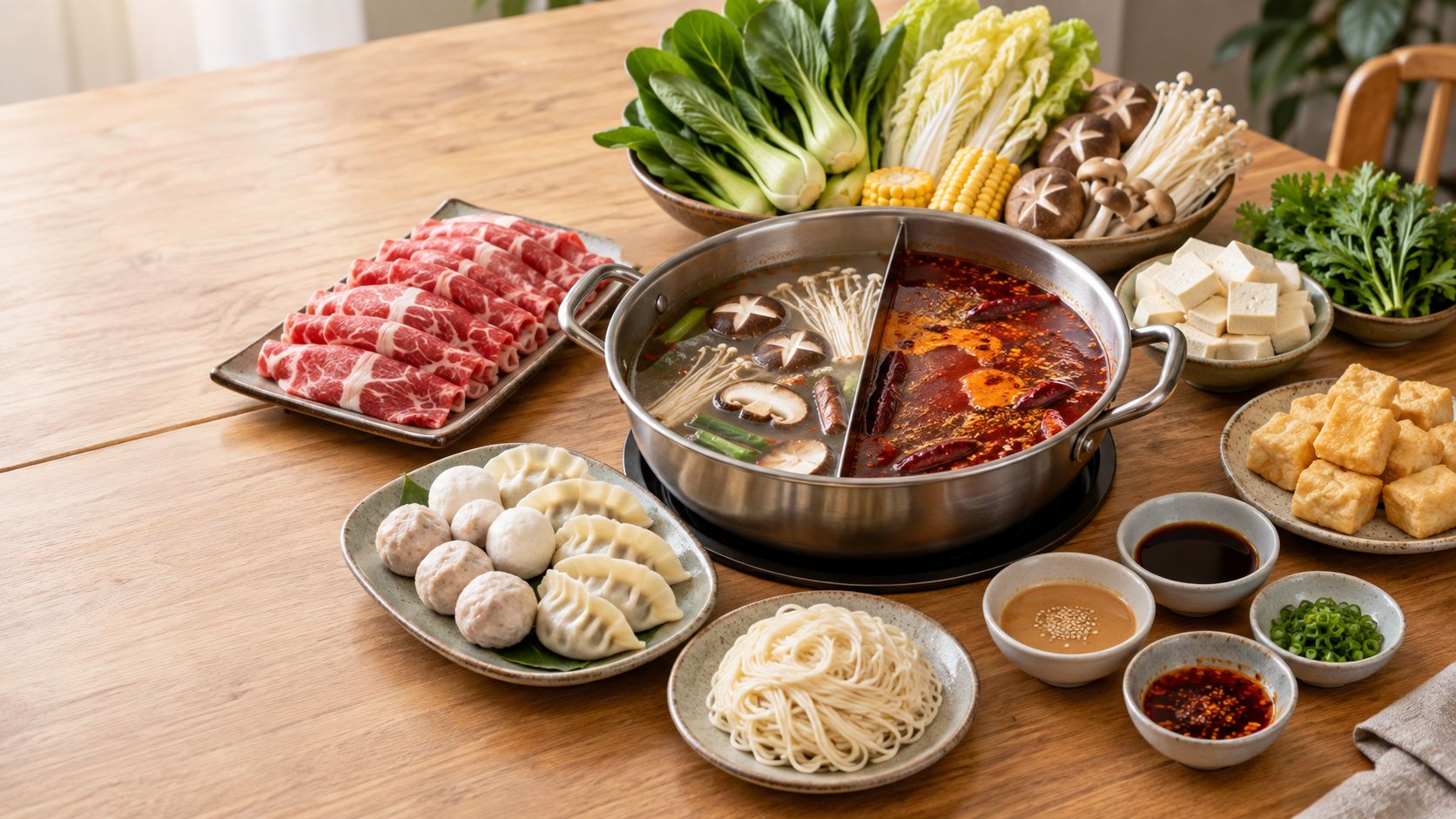
Hot pot is a Chinese table tradition with dozens of regional versions, and relatives in Japanese shabu-shabu, Korean jeongol and Thai suki. This list leans on the common Chinese setup and flags the optional additions.
Hot Pot Ingredients List: The Six Essentials
Every working hot pot covers these six. Everything else is preference.
- Broth. One, or two in a divided pot so spice-avoiders are not stuck.
- Thinly sliced protein. Beef, lamb, pork, chicken, seafood or plant.
- Tofu or hot pot balls. These soak up broth and add texture.
- Mushrooms and vegetables. Quick greens plus sturdier pieces.
- A starch. Noodles or rice cakes, cooked at the end.
- Dipping sauces. A small bar so everyone builds their own bowl.
Choose Your Hot Pot Broth
Broth sets the direction without needing to overpower it. Two mild broths beats one so fierce that everything tastes the same.
- Spicy mala. Dried chilli, chilli bean paste, aromatics and Sichuan peppercorns. Hot, savoury and numbing, and it suits beef, lamb, tofu, mushrooms and sturdy greens. If you want to explore Chinese regional cuisines, this is the Sichuan one on a plate.
- Mushroom. Mild and deeply savoury, from dried shiitake, ginger and spring onion. Works with everything, and the easiest vegan option.
- Tomato. Tangy, gently sweet, the most family-friendly. Good with seafood, tofu, cabbage and noodles.
- Plain or divided. A light chicken, vegetable or kombu broth lets the ingredients lead. A divided yin-yang pot runs one spicy and one mild at once, the simplest way to feed a mixed table.
Prepared soup bases save an hour but can be salty. Start with less than the packet suggests and top up once you can taste what the food is adding. There is more on choosing between them, and on making a mild base yourself, in the hot pot broth guide.
Meat and Poultry for Hot Pot
The defining hot pot cut is thin enough to cook in seconds. Asian grocers sell frozen rolls already sliced for it, which is easiest and usually cheapest: beef short plate, rib-eye or brisket, lamb shoulder or leg, pork belly or loin, chicken thigh, or meatballs made for hot pot.
No grocer nearby that slices it? Partially freeze a boneless cut for 30 to 60 minutes, then slice against the grain as thinly as you can. Firm meat cuts far more cleanly than soft. Plan 150 to 200g of protein per adult alongside tofu, vegetables and noodles.
Seafood, Fish Balls and Dumplings
Seafood cooks quickly and sweetens the broth: prawns, fish fillets in bite-size pieces, scallops, scored squid, and mussels or clams scrubbed well. Buy it last, keep it cold, and add it in small batches so you can pull it out the moment it is done.
Fish balls, fish cakes and seafood tofu sit in the same aisle but behave differently. They are already cooked or par-cooked, so they need heating through rather than cooking from raw, and they hold their shape all night.
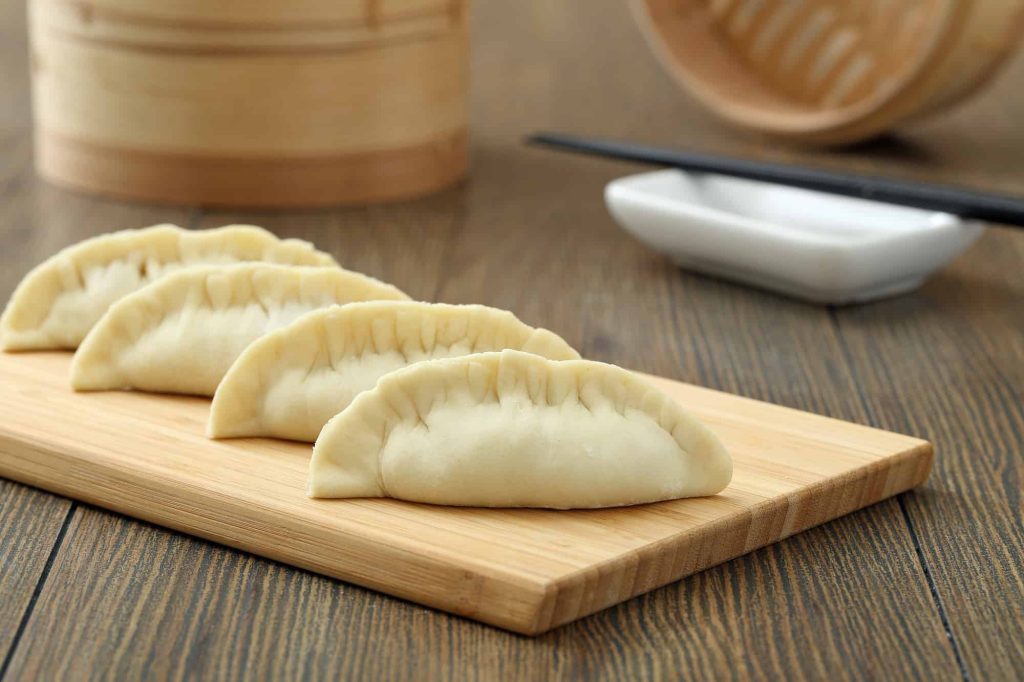
Frozen vegetable, prawn or pork dumplings go straight from the freezer into the broth. Follow the packet time: one that looks done outside can still be cold in the middle.
Tofu and Vegan Hot Pot Proteins
These carry broth flavour, and are worth buying even if nobody at the table is vegetarian.
- Firm tofu, cubed. The default.
- Frozen tofu, thawed. Freezing opens the texture so it drinks broth like a sponge.
- Fried tofu puffs, same effect, no preparation.
- Tofu skin or bean curd sheets, rehydrated, with a chewy bite.
- Fresh yuba, softer and silkier than the dried sheets.
- Vegan mushroom or tofu balls, if your grocer stocks them.
For a fully vegan pot, use a mushroom, kombu or tomato broth and build from tofu, yuba, mushrooms, vegetable dumplings, greens, corn, lotus root and noodles. Check labels on broth, balls, dumplings and sauces: fish sauce, oyster sauce, egg, wheat and meat stock turn up in products that look plant-based.
Mushrooms and Vegetables
Choose vegetables with different cooking times, so the pot stays interesting throughout.
- Leafy greens. Napa cabbage, bok choy, choy sum, water spinach, spinach, chrysanthemum greens. A brief dip near the end is all they need, and thick cabbage stems go in a few minutes before the leaves.
- Mushrooms. Shiitake, enoki, oyster, shimeji, king oyster, wood ear. Trim the bases and separate the clusters first. They deepen the broth as they cook, so they earn their place twice.
- Sturdy vegetables. Daikon, lotus root, potato, pumpkin, corn rounds, winter melon, taro. Slice thinly and add early: 10 to 20 minutes, against under a minute for a meat slice.
Tomato wedges, broccoli florets, zucchini, bean sprouts and bamboo shoots are not traditional here, but they are in every supermarket and they work.
Noodles and Other Starches
Noodles go in near the end, once the broth has picked up flavour from everything else. That is the best bowl of the night. Fresh wheat noodles, udon, rice noodles, glass noodles, instant ramen, Korean rice cakes and sweet potato noodles all work.
Thin rice vermicelli softens fast, so if that is your pick, our notes on how to prepare vermicelli noodles are worth a glance first.
Do not tip every starch in at once. Noodles release starch and turn the broth thick and cloudy. Cook one batch, serve it, then decide whether the table wants more.
Hot Pot Dipping Sauces and Condiments
Put out a small selection and let people mix their own. A useful bar holds light soy sauce, Chinese sesame paste, sesame oil, chilli oil or chilli crisp, Chinese black vinegar, and sha cha sauce, a savoury seafood-and-garlic paste that is a Taiwanese staple. Add garlic, spring onion, coriander, sesame seeds and crushed peanuts as toppings. Fermented bean curd is excellent and strong, so buy it for people who know they like it.
A balanced starting sauce: two tablespoons sesame paste, one tablespoon light soy, one teaspoon black vinegar, a little chilli oil, garlic and spring onion, thinned with hot broth until it coats rather than clumps. For a lighter dip, just soy, black vinegar, spring onion and coriander.
How Much Food to Buy Per Person
The planning rule that scales cleanly, per adult:
- 150 to 200g combined meat, seafood and plant protein
- 250 to 350g vegetables, mushrooms, tofu and dumplings
- 100 to 125g fresh noodles, or 60 to 75g dried
- 500 to 750ml broth, allowing for evaporation
Multiply by the number of adults and round up slightly. Children and light eaters need less. Hot pot runs slowly and people often feel full on less than they would eat at a plated dinner, so the middle of each range is usually right.
A Simple Hot Pot Shopping List for Four
| Category | Buy for four |
|---|---|
| Broth | 2 to 3 litres, or one to two prepared soup bases |
| Meat and seafood | 600 to 800g total, across two choices |
| Tofu | 1 block firm tofu, or 300g fried tofu puffs |
| Balls and dumplings | 300 to 400g |
| Leafy greens | 2 bunches |
| Mushrooms | 2 types, about 300g total |
| Sturdy vegetables | 2 types, such as corn and daikon, about 400g |
| Noodles | 400 to 500g fresh, or 240 to 300g dried |
| Sauces | Sesame paste, light soy, black vinegar, chilli oil |
| Garnishes | Spring onion, coriander, garlic, sesame seeds |
That is eight to twelve add-ins plus broth, noodles and sauces: plenty of variety without crowding the table. Buy more only if you want leftovers.
Prepare the Ingredients Safely
Hot pot puts raw meat and ready-to-eat food on one table, the single genuine risk in an otherwise easy meal. Three habits handle it.
Keep raw and ready-to-eat apart. Plate raw meat, poultry and seafood on their own dishes, never sharing with vegetables, tofu or anything cooked, and use separate boards and knives. Vegetables can be cut earlier in the day; raw protein is the last thing to leave the fridge.
Use separate utensils. Dedicated tongs or cooking chopsticks for putting raw food in, personal chopsticks only for taking cooked food out. This is the habit that matters most and it costs nothing.
Cook things through. USDA guidance gives these safe minimum internal temperatures: poultry, including ground chicken and turkey, 74°C/165°F; ground beef, pork, veal and lamb 71°C/160°F; whole cuts of beef, pork, veal and lamb 63°C/145°F with a three-minute rest; fish 63°C/145°F, or until opaque and flaking apart (source: USDA Food Safety and Inspection Service). Prawns, scallops, lobster and crab have no temperature target; cook them until the flesh is firm, pearly and opaque. Clams, mussels and oysters should open during cooking, and any that stay shut are best discarded.
Thin slicing and cooking right through matter far more than a stopwatch. Simmer strength changes all night as cold food goes in, and a 2mm slice and a 6mm slice are not the same job, so recipe-card times are a rough guide at best. Colour is not proof either. For poultry and anything thicker than a hot pot slice, a thermometer is the only real answer.
Frequently Asked Questions
What are the most popular hot pot ingredients?
Thin beef or lamb, fish balls, tofu, napa cabbage, bok choy, mushrooms, corn, dumplings and noodles. The mix changes by region and hot pot style.
Do you need special meat for hot pot?
No, but it must be sliced very thinly. Pre-sliced frozen hot pot rolls are easiest. At home, partially freeze a boneless cut for 30 to 60 minutes first.
What should go into the hot pot first?
Bring the broth to a full simmer, then add what takes longest: daikon, corn, potato and lotus root, then balls, dumplings and firm tofu. Thin meat and seafood go in small batches after that, then mushrooms and cabbage stems, then leafy greens. Noodles last.
How many ingredients should a hot pot have?
For four people, eight to twelve add-ins plus broth, noodles and sauces is plenty. More looks impressive but creates waste and makes safe storage harder.
Can I prepare hot pot ingredients ahead?
Vegetables can be washed and cut earlier in the day. Keep meat and seafood covered and refrigerated until the last moment, on separate boards and knives.
What do you need for a gluten-free hot pot?
Rice or glass noodles, plain meat, seafood, tofu and vegetables, and certified gluten-free tamari. Check the soup base, balls, dumplings, chilli bean paste and sha cha sauce: wheat appears in all of them.
The Bottom Line
For four people, a hot pot ingredients list comes down to one or two broths, 600 to 800g of protein across two choices, tofu and dumplings, two greens, two mushrooms, two sturdy vegetables, one noodle and a small sauce bar. Cook the dense things first and the greens last, keep raw proteins on their own plates with their own tongs, and cook everything through.
New to hot pot altogether? Start with our guide to hot pot at home, which covers the equipment, how much broth you need, cooking times for everything on this list and how to build a dipping sauce. Once the shopping list is sorted, our guide to storing and reusing leftover hot pot broth safely will save you throwing out the best part of the meal.