
Hot Pot Broth: Which Soup Base to Buy or Make
The short answer
Buy a packet base for your first few hot pots. A plain or mushroom base is the one to start with, because it lets the food taste of itself and nobody at the table gets left out. Use more water than the packet tells you, usually half as much again, since these are concentrates and they only get stronger as the night goes on. Once you have done it a few times, a mild broth from scratch takes twenty minutes and costs almost nothing.
Which Hot Pot Broth Should You Choose?
The broth matters less than people expect, and that is the useful part.
In hot pot the broth is a cooking medium first and a soup second. Everything that goes in leaves something behind, so a pot that started as plain chicken stock is a completely different thing three hours later, after lamb, prawns, mushrooms and a packet of noodles have been through it. A broth that shouts on the first mouthful will flatten everything you cook in it by the end.
So the question is not which broth is best. It is which broth still lets you taste a scallop.
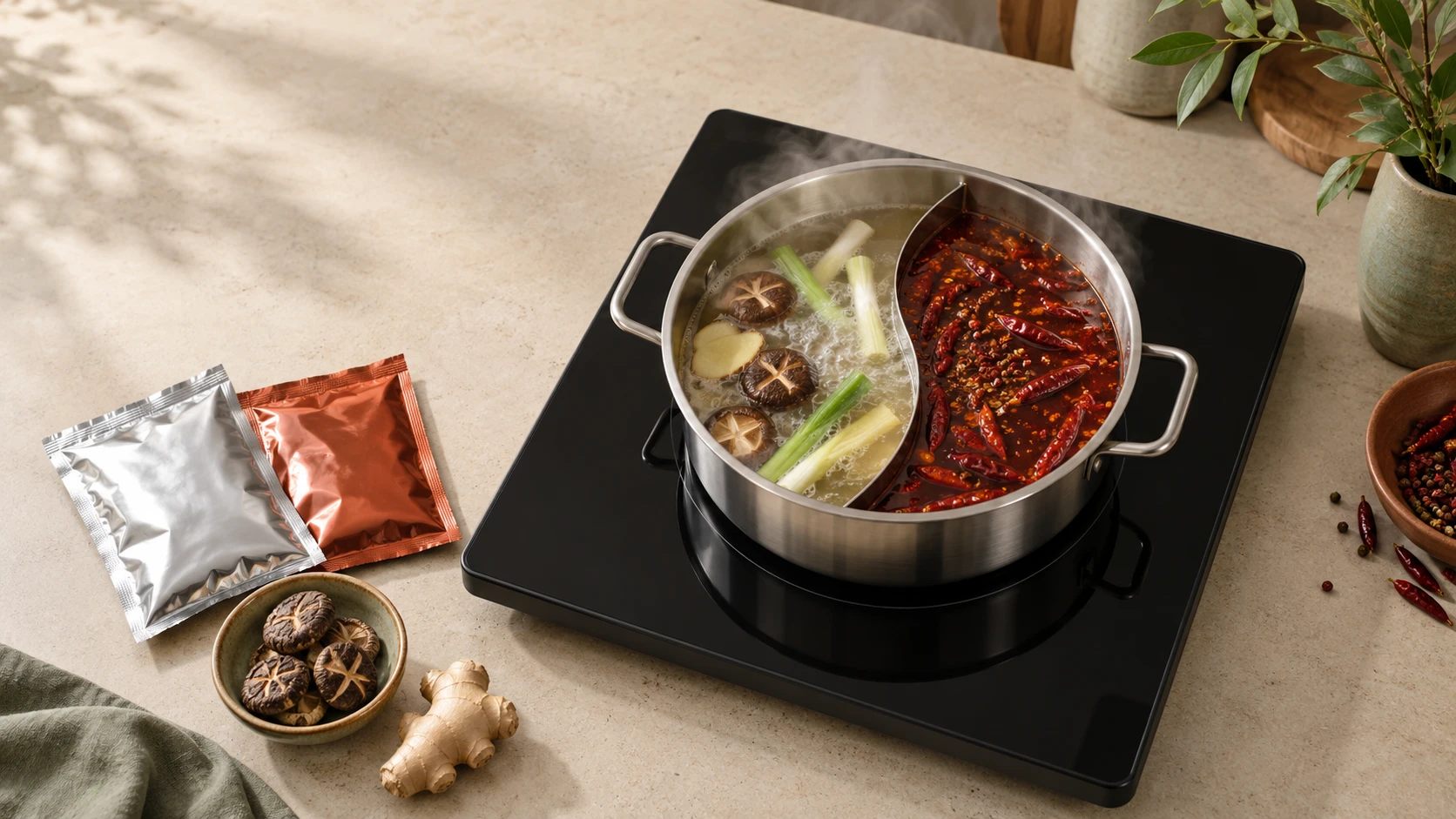
If you are cooking for more than about three people, the real answer is two broths in a divided pot. One mild and one spicy means the person who cannot take chilli is not stuck with vegetables, and it costs you nothing but a second packet.
The Main Hot Pot Broths, and What Suits Each
| Broth | What it tastes like | Best with | Worth knowing |
|---|---|---|---|
| Plain or clear | Light stock with ginger and spring onion. Savoury, not assertive | Everything, and the only fair choice for seafood | The one to start with. Also the easiest to make yourself |
| Mushroom | Deep and savoury without heat, from dried shiitake | Tofu, greens, noodles, anything vegan | The best mild option if plain tastes too thin to you |
| Tomato | Tangy and slightly sweet | Seafood, tofu, cabbage, noodles. The one kids eat | The usual gateway for a table that is nervous about chilli |
| Mala, Sichuan style | Hot and numbing at once, from dried chilli and Sichuan peppercorn | Beef, lamb, tofu, mushrooms, sturdy greens | The numbness fades as the pot reduces. See below |
| Satay | Rich, nutty, savoury, mildly sweet | Beef, lamb, leafy greens | Heavy. Better as the second broth than the only one |
| Tom yum | Sour, hot, aromatic with lemongrass and lime | Prawns, fish, mushrooms | Not traditional Chinese hot pot, and very good anyway |
Mala is the one most people picture, and it is worth being honest that it is a big flavour to hand a table that has not done this before. If everyone is keen, run it as half of a divided pot rather than the whole thing.
Buying a Packet Soup Base
A packet base saves an hour and is what most households use, including in China. There is nothing second-rate about it.
They come in two forms. Blocks and pastes are concentrated, often with a layer of solid fat or tallow, and they make the richest broth. Powders are cheaper and more convenient, and they can clump if you stir them into cold water, so dissolve them in a little hot water first.
What to look at on the packet:
- How many servings it claims. This is the number that matters and the one most likely to mislead. See the next section.
- Whether it is a base or a finished soup. A concentrate used undiluted is unpleasant, and the fat separates out and sits on top.
- The heat level, and then assume it is hotter. Scales are not consistent between brands.
Brand-wise, Little Sheep is the one usually recommended to start with, particularly its plain base, because it is widely stocked and not aggressive. Haidilao is the biggest name and its tomato base is the common first step for a table that wants flavour without heat. Lee Kum Kee's satay base is the easy way into that style. None of these is hard to find in an Asian grocer, and most large supermarkets now carry at least one.
Two packets of different bases and a divided pot is a better first purchase than one expensive one.
How Much Water: The Packet Is Optimistic
This is the single thing that goes wrong most often, and it is not your cooking.
Packet bases are salty and concentrated, and the dilution on the label tends to produce a broth that is right at the first taste and punishing by the end. It does not stay where you put it: the pot reduces for two or three hours over a burner, so it concentrates as you go, and everything you cook in it adds salt of its own, especially fish balls, processed dumplings and anything cured.
So use more water than it says. Roughly half as much again is a sensible starting point, and you can always add the rest of the packet twenty minutes in once you can taste what the food is contributing. You cannot take it out.
On salt generally: these are seasoned products and the figures quoted for a hot pot meal vary enormously, from around 2,800mg of sodium to over 7,000mg depending on the source and the base. That spread is wide enough to tell you the number depends almost entirely on which base you use and how much of the broth you actually drink. Most of the salt stays in the pot. If you want to eat less of it, the levers are to dilute more at the start and to go easy on bowls of broth at the end, rather than to avoid hot pot.
For how much broth to make in the first place, and the top-up rule, see the main hot pot guide.
Making Hot Pot Broth From Scratch
A mild base is genuinely easy, and it is the one worth learning because it is the one you will use most.
For four people, into about 2.5 litres of water or light chicken stock:
- A thumb of ginger, sliced, skin on
- Four spring onions, cut into lengths and bruised
- A handful of dried shiitake, and their soaking water
- Two cloves of garlic, crushed
- A piece of kombu if you have it, lifted out before it boils
- A splash of Shaoxing wine
- Salt, at the end and less than you think
Bring it up, hold it at a gentle simmer for twenty minutes, then leave the aromatics in. They keep working all evening and cost nothing.
Jujubes, goji berries and a few slices of daikon are common additions and all push it sweeter and rounder. A few white peppercorns give warmth without chilli, which is useful for a table with kids.
For the spicy half, the honest answer is that a proper mala base is an afternoon's work involving rendered tallow, doubanjiang, whole spices and a long infusion. It is a good project and it is not a weeknight. Until you want to take that on, buy the mala packet and make the mild half yourself. That is what most people do and the pot does not suffer for it.
Keeping the Broth Right All Night
A hot pot broth is a moving target for two or three hours. Four habits keep it good.
Safety
Make sure the broth is properly boiling before raw meat goes in, and let it return to the boil for at least 30 to 60 seconds afterwards. A pot that has dropped to a lazy simmer, which happens every time somebody adds cold water or a big plate of greens, is not reliably cooking thin raw meat. Turn the heat up, wait for it to come back, then carry on.
Skim it. Scum and loose starch build up from the first ten minutes. One pass with a fine mesh skimmer every so often keeps the broth clear and stops it tasting muddy.
Top up with hot water, never cold. A litre of cold water kills the simmer for five minutes and everyone stands around waiting. Keep a kettle going.
Put the starch in last. Noodles and dumplings shed starch and turn the broth cloudy and gluey, which is fine at the end of the meal and ruins it at the start.
Expect the mala to fade. The numbing quality of Sichuan peppercorn is volatile and it genuinely does soften over a couple of hours. This is not the packet cheating you. A small spoon of chilli oil or a few fresh peppercorns late in the evening brings it back if you want it back.
What Goes Wrong, and the Fix
- Too salty. Add hot water, or better, hot unsalted stock. A little sugar takes the edge off. Do not add more base to "balance" it.
- Too bland. Usually means you diluted well and then did not come back to it. Add the rest of the packet, or salt, or a spoon of the dipping sauce.
- Greasy on top. Normal with a tallow-based mala, and you can lift some off with a ladle. Too much grease usually means fatty meat rather than the base.
- Cloudy and thick. Starch. It has become soup rather than a cooking medium, which is the signal that the meal is near its end.
- Boiled dry at one side. Divided pots reduce unevenly, because one half usually gets more traffic. Top both sides, not just the one you notice.
When it is over, what is left is worth a decision of its own: see whether to keep the broth.
Frequently Asked Questions
What broth is used for hot pot?
Most often a packet soup base in one of a few styles: plain or clear, mushroom, tomato, spicy mala, or satay. A plain or mushroom base is the easiest to start with, because it lets the ingredients taste of themselves. Many tables run two at once in a divided pot.
Can you use plain water for hot pot?
You can, and some regional styles come close to it, cooking in water with only ginger and spring onion and putting all the flavour in the dipping sauce. It works better than it sounds, but a light stock with a few aromatics is a large improvement for very little effort.
How much water do you add to a hot pot soup base?
More than the packet says. Start with around half as much again as the label suggests, then taste after twenty minutes and add the rest of the base if it needs it. The pot reduces and gets saltier all evening, and every ingredient adds something back.
Can you make hot pot broth ahead of time?
Yes, and a homemade mild base is better for a night in the fridge. Make it the day before, chill it, then bring it back to a full boil before the meal starts.
Why did my hot pot broth stop being numbing?
The numbing compounds in Sichuan peppercorn are volatile and fade with long cooking. It is normal rather than a fault in the base. Add a little chilli oil or a few fresh peppercorns late on if you want it back.
Is hot pot broth meant to be drunk?
A small bowl at the end is traditional and it is the best-tasting the broth ever gets, since everything has been through it. It is also where the salt is concentrated, so treat it as a small course rather than a soup.
What is the best hot pot soup base for beginners?
A plain or mushroom base. They suit every ingredient, nobody is excluded, and they leave the dipping sauce to do the work, which is where the variety in a hot pot really comes from anyway.
Do you need two broths?
Only if someone at the table will not eat the spicy one, which in most households is somebody. If everyone eats the same, one broth in a plain pot is simpler and holds more.
The Bottom Line
Plain or mushroom to start, tomato if the table wants flavour without heat, mala as half of a divided pot rather than the whole thing. Use more water than the packet says and come back to it after twenty minutes. Keep it boiling when raw meat goes in, skim it, and top it up hot.
Then set it up with the main hot pot guide, shop from the hot pot ingredients list, and check you have the right burner and pot.