Is Supermarket Meat 3D Printed? How to Tell What You're Really Looking At
The short answer
No. There is no evidence that any major supermarket is selling 3D printed animal meat. A steak with odd, even layers is far more likely to be restructured or "formed" meat, which is smaller pieces joined into one shape. In the US that has to say "formed" or "reformed" in the product name, so the label will tell you.
In July 2026 a TikTok video filmed at a Fred Meyer store showed a steak with strangely uniform layers, and the caption said it looked 3D printed. It passed 1.8 million views. If you’ve seen it, or one like it, and started squinting at the meat counter, this is what’s actually going on and how to check for yourself.
Seen the viral post about 3D printed meat in US stores? Here's the fact check. Not sure what the pack is telling you? How to tell if meat is 3D printed, plant-based or lab-grown.
Where did the “3D printed meat” rumours come from?
There have been a few, and they tend to spread the same way: a short video, a confident caption, and a lot of shares.
- Fred Meyer, US (July 2026). A TikTok video posted on 24 July 2026 showed a uniform, layered-looking steak and said it looked “3D printed”. Subplot News looked into it and said restructured or formed meat is the most likely explanation. Fred Meyer hadn’t responded when that article was published.
- The Campbell’s recording (November 2025). A Campbell’s executive was secretly recorded saying he didn’t want to eat chicken “that came from a 3D printer”. Campbell’s fired him, called the claims “patently absurd”, and said the chicken in its soups comes from long-trusted, USDA-approved US suppliers (Fortune, 3DPrint.com).
- Tesco, Sainsbury’s and Morrisons, UK (2024). TikTok videos claimed all three sold 3D printed meat under their own brands. Fact-checkers rated it false. The account behind the videos sells stickers matching the labels shown in them, and all three supermarkets denied the claim to Reuters (Black Dot Research).
- “All our food is 3D printed.” A 2025 fact-check found this claim from a TikTok creator was entertainment content, not a factual claim (Lead Stories).
Does 3D printed meat actually exist?
Yes, but it isn’t what the videos suggest.
The main commercial 3D printed “meat” is plant-based. Redefine Meat, for example, prints it from wheat, soy and potato protein. By 2024 it was in more than 4,000 restaurants and other foodservice venues in Europe, and its flank steak had launched in retail through Ocado in the UK, Coop in Switzerland and Dutch supermarkets (Green Queen). It’s sold as plant-based and labelled that way. Nobody is slipping it into the beef fridge.
Lab-grown, or cultivated, meat is a separate technology. It’s animal cells grown outside the animal, and it can be combined with printing, but it isn’t on US grocery shelves (CSG Midwest). As of 2026, seven US states ban making or selling it: Alabama, Florida, Indiana, Mississippi, Montana, Nebraska and Texas (National Agricultural Law Center).
For how the printing works, who’s building it and where the safety rules sit, see our full explainer, what is 3D printed meat and is it safe to eat.
So what’s that weird-looking steak?
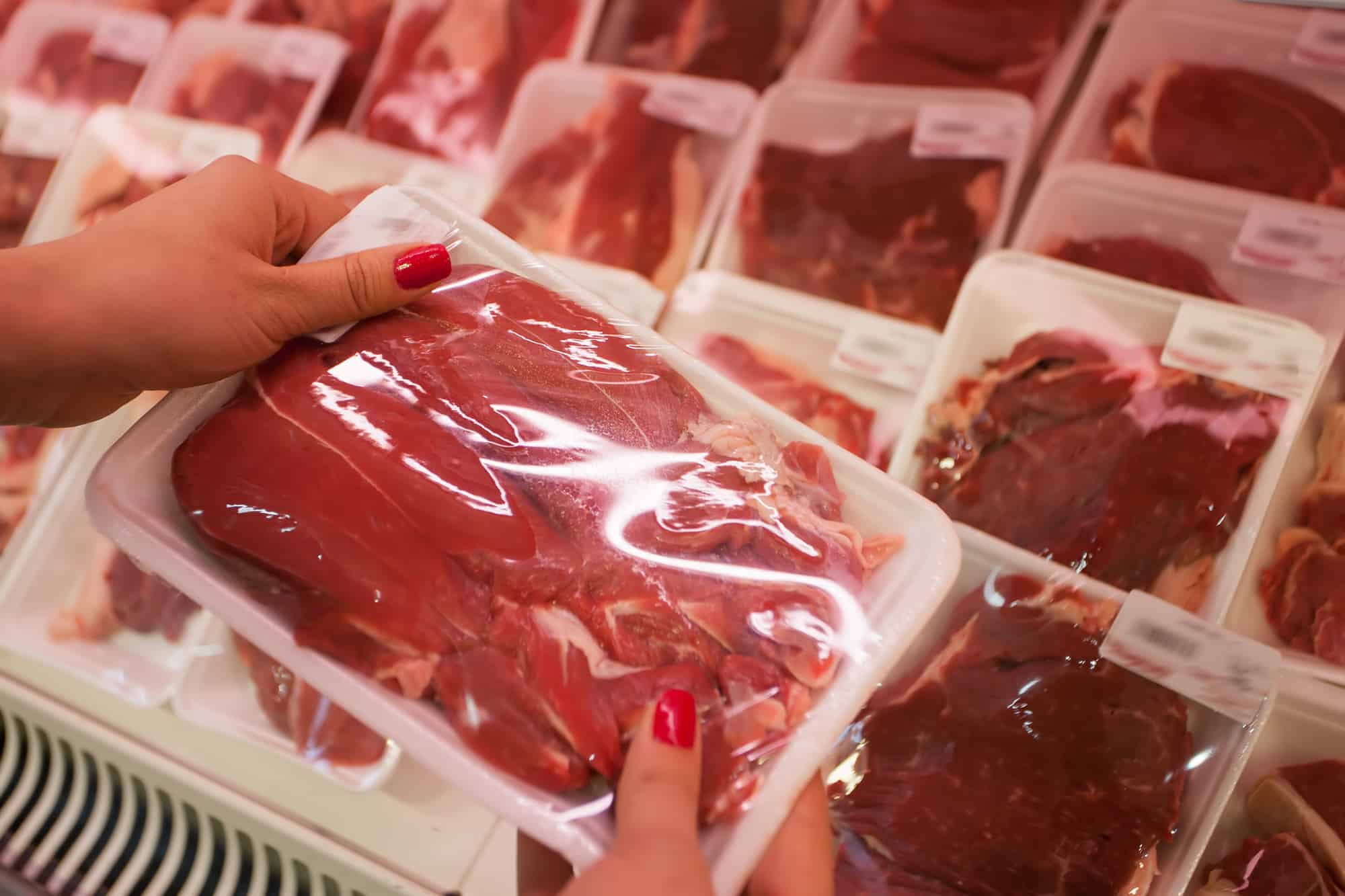
Most likely restructured or “formed” meat. This is made by joining smaller pieces of meat into one uniform shape, and the joins can leave visible seams or layers (USDA FSIS rule). Look at one of those TikTok steaks again with that in mind and the even stripes make a lot more sense.
What is meat glue and is it allowed?
One common way to bind the pieces is an enzyme called transglutaminase, often shortened to TG and nicknamed “meat glue”. It links proteins on the surfaces of the pieces so they hold together as one cut.
It’s legal and regulated. In the US it has been covered by a USDA FSIS rule since 2001, which sets out how products bound with it must be labelled (Federal Register). In Australia and New Zealand, FSANZ has approved it as a processing aid (FSANZ A1275). The name sounds alarming. The practice isn’t secret and it isn’t banned.
How can I tell if meat is 3D printed or formed?
This is the useful part. In the US, when TG enzyme binds pieces into a cut, the product name must say “formed” or “reformed”. The rule’s own example is “Formed Beef Tenderloin”. The enzyme must also appear in the ingredients list (USDA FSIS).
What to look for:
- “Formed” or “reformed” in the product name. That’s the tell for joined pieces.
- An ingredients list on a piece of plain meat. A whole steak normally doesn’t need one. If there is one, read it for the enzyme.
- “Plant-based” on the pack. Printed plant-based products are sold as plant-based, not as beef.
- Ask at the meat counter. “Is this a whole cut or formed?” is a normal question, and the butcher will know.
Is Fred Meyer selling 3D printed meat?
There’s no evidence it is. The viral video showed a steak with uniform layers, and the most likely explanation, according to Subplot News, is restructured or formed meat. Fred Meyer hadn’t responded publicly when that report was published, so there’s no statement from the store either way. If you buy there and want to be sure, check the product name for “formed” and ask at the counter.
What about the UK and Australia?
UK. The 2024 videos about Tesco, Sainsbury’s and Morrisons were a hoax, and all three denied them. Printed plant-based meat has reached UK retail, through Redefine Meat’s flank steak on Ocado, but it’s sold and labelled as plant-based.
Australia. We found no 3D printed meat rumour aimed at Coles or Woolworths. Lab-grown meat is legal here: Food Standards Australia New Zealand approved Vow’s cell-cultured quail in June 2025, after about two years of assessment, finding no toxicological, nutritional or allergenic concerns (ABC News, FSANZ A1269). It was headed for high-end restaurants in Sydney and Melbourne, not supermarket shelves. Transglutaminase is a permitted processing aid here too.
Is lab-grown meat sold in supermarkets?
Not in the US. It isn’t on grocery shelves there, and seven states ban its manufacture or sale outright. In Australia, the one approved product, Vow’s cultured quail, was aimed at restaurants in Sydney and Melbourne. In the UK and Europe, the printed products you might see in a shop are plant-based, not grown from animal cells.
Is 3D printed meat safe to eat?
That depends on which kind you mean, printed plant protein or cultivated animal cells, and it’s a bigger question than this page covers. In Australia, the one approved cultivated product went through about two years of assessment by FSANZ before it was cleared. We cover the regulation and the safety questions in detail in what is 3D printed meat and is it safe to eat.
The bottom line
No, your supermarket steak isn’t secretly printed. Odd-looking, evenly layered meat is usually formed meat, pieces joined together, and in the US it has to say so in the name. Printed plant-based products and lab-grown meat do exist, but they’re labelled, niche, and mostly sold somewhere other than the beef fridge. If in doubt, read the label or ask the butcher.
Sources
- Subplot News, Fred Meyer Meat: Is It “3D-Printed”?, 26 August 2026
- Fortune, Campbell’s fires executive caught in recording, 26 November 2025
- 3DPrint.com, Campbell’s Exec Fired After “3D Printed Chicken” Claim
- Black Dot Research, Are supermarkets in the UK selling 3D printed meat?, 30 October 2024
- Lead Stories, Fact check: all of our food is not 3D printed or bioengineered, December 2025
- Green Queen, Redefine Meat Debuts 3D-Printed Beef Flank Steak in Europe Retail, 5 July 2024
- US Federal Register, Use of Transglutaminase Enzyme and Pork Collagen as Binders in Certain Meat and Poultry Products, 31 October 2001
- USDA FSIS, How would a consumer know if they purchased a product processed with TG enzyme?
- ABC News, Lab-grown meat has just been approved for consumption in Australia, 24 June 2025
- FSANZ, A1269 Cultured Quail as a Novel Food
- FSANZ, A1275 Transglutaminase from GM Bacillus licheniformis as a processing aid
- National Agricultural Law Center, Cell-Cultured Meat Updates
- CSG Midwest, Cell-cultured meat remains focus of new laws, 4 May 2026
Related
Start with the guide: 3D printed meat: the plain-English guide
- How to tell if meat is 3D printed, plant-based or lab-grownYou cannot tell by looking at it. The pack tells you, so check the brand, the product name and the ingredient list.
- Is 3D printed meat being sold in US supermarkets?Yes, one 3D printed product is in some US stores. It is Perfecta, from Steakholder Foods, and it is plant-based, not lab-grown.
- What is 3D printed meat, and is it safe to eat?The plant-based 3D printed meat on US shelves is covered by the same food safety rules as any packaged food. Lab-grown meat goes through its own review before it can be sold.
Also on Cuisine Seeker: Why do I crave sugar at night?