
Can Spinach Make You Gassy or Bloated? Here's Why
Spinach can make you gassy or bloated, and the usual reason is the amount rather than the spinach itself. It is high in insoluble fiber, which passes through the gut largely undigested, so a big serve on top of an already fibrous day is what tends to bring on the wind and the tight feeling. A smaller portion usually settles it.
Spinach also contains salicylate, which some people react poorly to. Below is what changes the effect, what does not, and what to do if you want the spinach without the afternoon that follows it.
Can Spinach Give You Gas or Make You Fart?
Eating spinach can cause gas if you eat too much of it because it is rich in fiber. This is true for fresh spinach, as well as frozen and canned spinach, as will be explained in the next section.
Why Does Spinach Make Me Gassy?
Spinach has high levels of fiber, particularly insoluble fiber (source: Journal of Food Science and Technology.) Eating more than the recommended daily allowance (RDA) of fiber for the day, or eating beyond what you’re used to, will lead to consequences like gas and bloating.
According to a study on the nutritional content of fresh, frozen, and canned fruits and vegetables, the fiber content of vegetables, including spinach, didn’t change very much during storage or processing.
Generally, the fiber content of fresh, frozen, and canned vegetables was similar (source: Journal of the Science of Food and Agriculture).
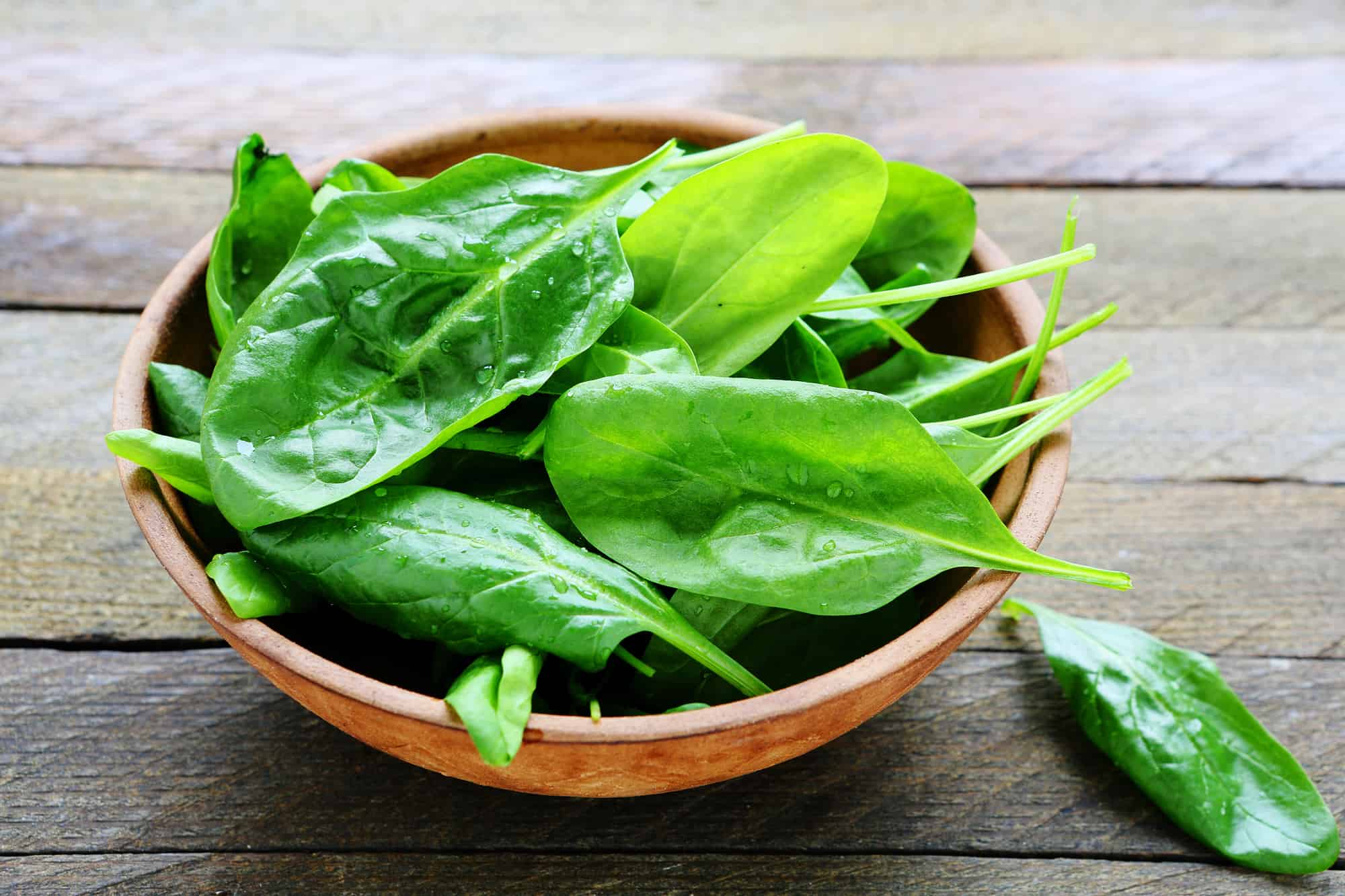
The RDA for fiber for different age groups is the following:
- Women under 50 years old: 25–28 g
- Men under 50 years old: 31–34 g
- Women over 51 years old: 22 g
- Men over 51 years old: 28 g
(source: Dietary Guidelines for Americans)
A bunch of spinach, about 340 g, has a fiber content of approximately 7.48 g. That’s about a quarter of the RDA for the day (source: USDA). While this may not be too much spinach, remember that spinach wilts and reduces its size dramatically when cooked.
If you eat foods rich in fiber throughout the day, you might go beyond the limit.
Fiber has many health benefits, such as positive effects on gut health, insulin sensitivity, management of cardiovascular diseases, and overall metabolic health (source: Nutrients).
However, eating too much fiber may cause adverse effects such as gas, bloating, stomach cramps, diarrhea, or constipation.
While fiber can bind cholesterol and fat in the diet, it can also bind iron, magnesium, calcium, and zinc, which means they won't be absorbed by the body.
Another con of eating too much fiber is that it can cause intestinal blockage, especially if you don’t drink enough fluids (source: Duke University).
Insoluble fiber is not soluble in water. It passes through the gut quickly, doesn't ferment, and is left undigested. This may result in slight digestive discomfort. If you eat a lot of insoluble fiber, the discomfort will be magnified.
Spinach also contains salicylate, which some people don’t react well to. Salicylate allergy can lead to stomach upset, diarrhea, and colitis, which can all cause bloating and gas (source: WebMD).
Furthermore, since spinach helps regulate insulin, too much of it might lower your blood sugar. This is not good if you already have low blood sugar levels (source: Nutrients).
How Do I Avoid Spinach Making Me Fart?
What happens if you want to eat nutritious spinach but don’t want the consequences that come with its fiber content? The answer is to not eat too much of it, and don’t eat it with other insoluble-fiber-rich vegetables or fruits.
Eating spinach raw or cooked won’t make much difference, for the reasons described above.

Here are some of the most common high-fiber foods you might not want to consume with spinach:
- Fiber supplements
- Ready-to-eat cereal
- Artichokes
- Navy beans
- Small white beans
- Yellow beans
- Lima beans
- Most beans
- Fufu
- Pumpkin
- Sapote or Sapodilla
- Guava
- Raspberries
(source: Dietary Guidelines)
Moreover, here are some tips to help you reduce the bloated feeling and gas while still enjoying fibrous foods:
- Strategize which fibrous foods you will eat with each meal. If you’re eating a granola bar for breakfast, you may eat spinach for dinner to give your digestion a chance to catch up.
- Substitute high-fiber foods for lower-fiber ones. For example, instead of eating raspberries, swap them for plums or peaches.
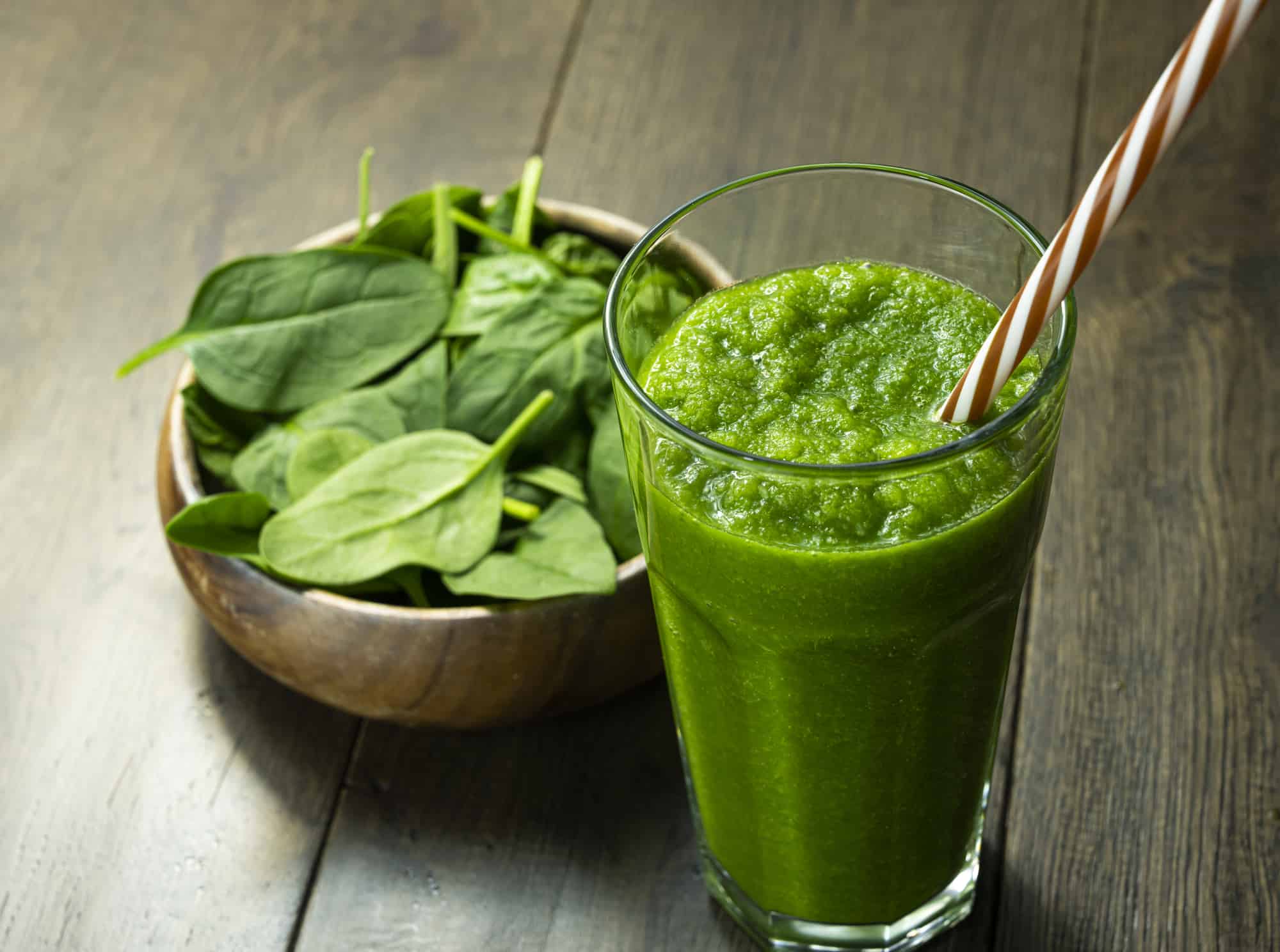
- If you don't want excessive consumption of fiber but still want the healthy nutrients from your fruits and vegetables, you may extract their juices using a juicer.
If you have any medical conditions, especially if they involve blood glucose or digestion, we recommend seeing your doctor to discuss fiber intake.
Common Questions About Spinach, Gas and Bloating
Does cooked spinach cause less gas than raw spinach?
Not by much. Cooking wilts spinach and makes it easier to eat a larger quantity, but it does not remove the insoluble fiber that causes the gas in the first place. If anything, a cooked serve can be the bigger serve, because a whole bunch reduces to a few forkfuls.
Do frozen or canned spinach cause less gas than fresh?
No. A study on fresh, frozen and canned produce found the fiber content of vegetables including spinach changed very little during storage or processing, so all three forms behave much the same in your gut. Choose whichever suits the meal and watch the portion instead.
How much spinach is too much?
A bunch of spinach, roughly 340 g, carries about 7.48 g of fiber, which is around a quarter of an adult daily allowance. That is not a lot on its own. It becomes a lot when the rest of the day already included cereal, beans or a fiber supplement, which is why the total matters more than the spinach.
Why does spinach bloat me when other greens do not?
Two things separate spinach from a lettuce or a cucumber. The first is how much insoluble fiber it packs into a small cooked volume. The second is salicylate, a compound some people tolerate poorly, which can bring on stomach upset in its own right. Tolerance varies a lot between people.
Can spinach cause stomach cramps or diarrhoea?
Too much fiber of any kind can bring on cramps, diarrhoea or constipation, and spinach is a concentrated source. Not drinking enough fluid alongside a high fiber intake makes it more likely. If this is a regular pattern for you rather than a one-off, it is worth raising with your GP.
Does spinach in a smoothie cause less bloating?
A blended smoothie keeps all the fiber, so it behaves like eating the spinach. Juicing is the one that changes things, because it extracts the liquid and leaves most of the fiber behind. That is a way to get the nutrients with less bulk, though you also lose fiber's benefits.
Does spinach stop you absorbing iron and other minerals?
Fiber binds cholesterol and fat, and it can bind iron, magnesium, calcium and zinc along with them, which means some of those minerals pass through rather than being absorbed. This is a reason not to overdo fiber generally, rather than a reason to avoid spinach.
Which foods should I avoid eating with spinach?
The ones that stack more insoluble fiber on the same meal: fiber supplements, ready-to-eat cereal, artichokes, most beans, pumpkin, guava and raspberries. Spreading these across different meals gives your digestion a chance to catch up, which is usually more practical than cutting any of them out.
Should I stop eating spinach if it makes me gassy?
Usually not. For most people the fix is a smaller serve and better spacing across the day rather than removing it. If you have cut the portion right back and the bloating continues, or it comes with pain, weight change or blood, that is a conversation for your doctor rather than a recipe problem.
Where To Go Next
Trish Tucker-May is the nutritionist behind the food side of this site, and portion, timing and tolerance are exactly the ground she covers, so her page is a good next read if spinach is a regular problem for you. Her soothing green smoothie is built around this question, using gentler greens in a smaller volume.
If spinach is one of several foods doing this to you, the pattern is usually fiber rather than any one vegetable. Peanuts, kimchi and seaweed come up for the same reason, and the gut and digestion index collects the rest of these answers food by food.
Keep reading: Trish Tucker-May on gut health All the gut and digestion answers on this site