
What Does 3D Printed Steak Taste Like? What the Reviews Say So Far
The short answer
Not much like steak, going by the reviews so far. A Washington Post food writer who cooked Perfecta's 3D printed filet mignon in November 2026 found it uniformly dense, with a processed, hot-dog-like texture and an artificial flavour with a bitter, sour edge. A WIRED writer who tried Steakholder's earlier printed steak in 2024 found the crust convincing and the inside dry and bland. Redefine Meat's printed flank steak, sold in Europe, gets better reviews for texture, and reviewers are split on its flavour.
The published reviews of 3D printed steak are few, and none of them is a rave. The most detailed one yet, a Washington Post tasting of the Perfecta range that went on sale in the north-eastern US in September 2026, is blunt in its title: the writer wished they had not tried it. Here is what each reviewer actually found, in our words, with links so you can read the full pieces.
What did the Washington Post make of Perfecta?
On 6 November 2026 The Washington Post published a tasting of two Perfecta products, the plant-based filet mignon and the plant-based chicken breast, and it was syndicated on Yahoo the same day (The Washington Post, Yahoo). Perfecta is the range from Steakholder Foods that we break down in Perfecta 3D printed steak: what’s in it.
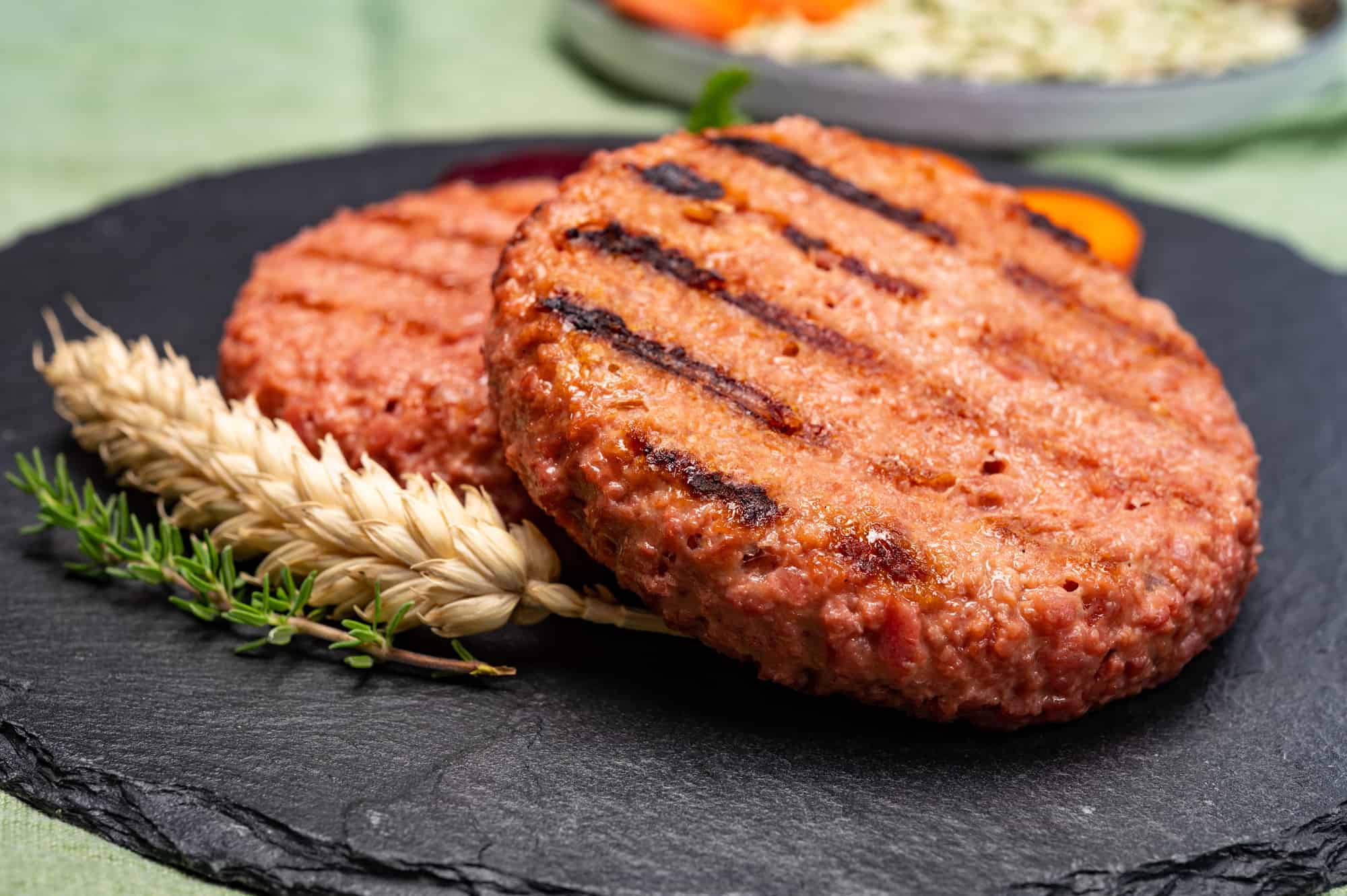
On the filet, the reviewer’s main complaint was texture. A real steak has fibres and a grain, and it cooks unevenly in a way that is part of the pleasure. The printed filet had none of that irregularity. Cooked, it was described as uniformly dense, with a processed quality the writer compared to a hot dog. The flavour fared no better: instead of the savoury richness of beef, the reviewer got an artificial taste with a bitter, sour note that lingered.
The chicken breast browned better than the steak but did not hold together like a piece of poultry. The reviewer described a spongy, ground-meat texture and an odd synthetic smell, and did not like the flavour. The piece also notes that both products list methylcellulose, a binder that is also used in some bulk-forming laxatives. We look at what that ingredient is, and what the laxative point does and does not mean, in is methylcellulose safe to eat?
Steakholder’s response, quoted in the piece, was that it is simple: the product has to taste great. That is the company’s stated goal rather than a disagreement with the verdict.
One Post review is one set of taste buds, cooked one way. It is also, as of early November 2026, the only hands-on review of the retail Perfecta range from a major outlet that we could find.
What did earlier reviewers say about Steakholder’s printed steak?
Before Perfecta reached shops, WIRED’s Matt Reynolds tested samples sent by Steakholder Foods, in a review published in October 2024 and summarised by the 3D printing site Fabbaloo (Fabbaloo). His verdict split the steak in two. The outside was the good part: it browned properly and developed a crust, which suggested the company had worked out the Maillard reaction that gives cooked meat its savoury notes. The inside was the problem, dry and strangely lacking in taste. The reviewer’s overall judgement was that the samples were technically food, which Fabbaloo summed up as edible but lacking flavour.
Steakholder’s chief executive had said as much himself a year earlier. Talking to CNN about the company’s cultivated fish prototype, he acknowledged that the steaks it was printing did not yet have the same taste and texture as the real thing, and said he expected the gap to close over the following decade (CNN). Two years on, the Post review suggests the gap is still there.
How does Redefine Meat’s 3D printed flank steak compare?
Redefine Meat, another Israeli company, has been selling printed plant-based flank steak to European restaurants since 2021 and to UK supermarkets since 2025, so it has had more reviews. They are kinder, and they agree on one thing: the texture is the strong point. We profile the company in who makes 3D printed meat?
- A Twisted Food reviewer, writing when the flank steak reached Ocado, was struck by the visible muscle-like fibres and rated the look, texture and mouthfeel as the product’s edge over rivals. On flavour, a tasting companion said it still tasted like fake meat, if better than the supermarket average, and the reviewer’s own verdict was that the meaty flavour did not stand out (Twisted Food).
- A self-described meat lover at The Star in Sheffield was pleasantly surprised: pink in the middle, a meaty texture, and a steak they enjoyed to the last bite (The Star).
- A food blogger at Life in Full Flavour found the texture very close to meat but said the flavour of steak had not been replicated, describing it as pleasant and versatile rather than beefy (Life in Full Flavour).
So the pattern for Redefine is texture yes, beef flavour not quite. For Steakholder’s products it is neither, at least so far.
Why is texture the hard part?
Because a steak is not one thing. Real muscle is long bundles of fibre running in one direction, held in connective tissue, with fat marbled through it. When you bite, the fibres pull apart along the grain, the fat melts and the connective tissue gives a little chew. Mince, sausages and nuggets are easy for plant-based makers because the real thing is already ground up. A whole cut is the opposite: all the structure is on show.
3D printing exists to solve exactly that. Steakholder lays down thin lines of protein paste in one direction, with streaks of fat paste between them, so the piece has a grain and marbling that a mould cannot produce (Green Queen). The reviews suggest the method gets the look right and the bite only partly. Soy paste bound with methylcellulose does not pull apart like muscle, and coconut and rapeseed oil do not render like beef fat, so the piece reads as dense and even rather than fibrous. Redefine’s better texture reviews suggest that is a problem of recipe and engineering rather than a limit of printing itself.
Why does it not taste like beef?
This part is not unique to printing. Beef flavour comes mostly from fat, from the iron-rich haem in muscle, and from hundreds of compounds created when meat browns. Plant-based meat has to build all of that from oils, yeast extracts, flavourings and colours. Perfecta’s steak lists natural flavouring, salt, beetroot powder and caramel colour after its soy, oils and binders, and no haem ingredient. Impossible Foods adds a fermented soy haem to get closer to a bloody, iron taste, and even that divides tasters. The bitter, sour note the Post reviewer picked up is a common complaint about soy-protein products generally, and it is a reasonable guess, no more, that this is what they were tasting. Our general piece on 3D printed vs lab-grown vs plant-based meat explains why printed plant protein is in a different category from cultivated meat, which is real muscle and does taste of it.
How should you cook it to give it the best chance?
Follow the pack first. Beyond that, a few things are consistent across the reviews and across plant-based whole cuts generally.
- Hot and fast. A very hot pan or grill gives the crust that WIRED found convincing. Long, gentle cooking dries the inside out, because there is no collagen to soften and no fat to render.
- Do not aim for an internal temperature. It is plant protein, so it does not need cooking through for safety the way chicken does. Cook it for colour and warmth, then stop.
- Season generously and sauce it. The reviews agree the base flavour is thin. A marinade, a peppercorn or chimichurri sauce, or slicing it thin across the grain for a stir-fry or tacos all play to what it does well and cover what it does not.
- Judge it as its own thing. Redefine’s happiest reviewers compared it with other plant-based products, not with a dry-aged rib-eye.
Common questions
Does 3D printed steak taste like real steak?
Not according to the reviews so far. Reviewers describe Perfecta’s as dense and artificial-tasting and Steakholder’s earlier samples as dry and bland inside. Redefine Meat’s flank steak is praised for texture, with reviewers divided on whether it tastes of beef.
Has anyone reviewed Perfecta?
Yes. The Washington Post published a tasting of the filet mignon and chicken breast on 6 November 2026, and it was negative on both texture and flavour. We found no other hands-on review of the retail range from a major outlet.
Is 3D printed steak worth the price?
Forbes reported Perfecta packs at about US$10 each in north-eastern US stores, and Redefine’s 200 g flank steak is £7.97 at Asda. Whether that is worth it depends on why you are buying. If you want a plant-based centrepiece with a steak-like look, it is one of very few options. If you want it to taste like beef, the reviews say not yet.
What does 3D printed chicken taste like?
The one published review, from The Washington Post, found Perfecta’s chicken breast browned reasonably but had a spongy, ground-meat texture, a synthetic smell and a poor flavour.
Is the taste the same as lab-grown meat?
No. Lab-grown meat is real animal muscle and fat, so it tastes of meat. 3D printed steak on sale today is plant protein, and its flavour comes from oils, flavourings and colours.
The bottom line
The early verdict on 3D printed steak is that the printer has got the look of a whole cut further than any mould, and the recipe has not caught up. Perfecta’s one major review was poor on texture and flavour, WIRED found Steakholder’s earlier steak dry and bland inside, and Redefine Meat’s flank steak shows that printed plant protein can at least get the bite right. If you try one, treat it as a new plant-based product, cook it hot and quick, and season it well.
Read next: 3D printed meat: the plain-English guide, Perfecta 3D printed steak: what’s in it, Where to buy 3D printed meat and Is 3D printed meat safe to eat?
Sources
- We tried 3D-printed meat and wished we hadn't, The Washington Post, 6 November 2026
- We tried 3D-printed meat and wished we hadn't (syndicated), Yahoo Lifestyle
- 3D Printed Meat: Edible but Lacking Flavor, WIRED Review Finds, Fabbaloo, on WIRED's October 2024 review
- 3D-Printed 'Meat' Has Arrived At Grocery Stores In The Northeast, Forbes, 22 October 2026
- Redefine Meat: Vegan steak to launch in Ocado, a review, Twisted Food
- I tried a vegan steak as an unapologetic meat-lover, and it wasn't what I expected, The Star (Sheffield)
- Review of Redefine Meat, Life in Full Flavour
- Steakholder Foods and Umami Meats have teamed up to create the world's first 3D-printed cultivated fish fillet, CNN
- Steakholder Foods Launches Perfecta at Retail Outlets Across the Northeastern U.S., GlobeNewswire, 3 September 2026
- Steakholder Foods Rolls Out 3D-Printed Whole-Cut Meat at US Supermarkets, Green Queen
Related
Start with the guide: 3D printed meat: the plain-English guide
- Perfecta 3D-printed steak: what is in it?Perfecta is a plant-based range made mainly from soy and wheat protein and printed in layers. It is not real meat and it is not grown from animal cells.
- Who makes 3D printed meat? The companies behind itThree companies make nearly all the 3D printed meat you can buy: Steakholder Foods (Perfecta) and Redefine Meat in Israel, and Novameat in Spain. All three print plant protein, not animal cells, and none sells lab-grown meat.
- Where to buy 3D printed meat in the US and AustraliaNo store has been publicly named in either country. The only 3D printed whole-cut range we found is plant-based Perfecta in the north-eastern US, and we found none on sale in Australia.
Also on Cuisine Seeker: Why do I crave sugar at night?